Boat shows: Cannes, Düsseldorf, La Rochelle… which one for what
Düsseldorf in January, Cannes and Monaco in September, La Rochelle in autumn: what on-water and indoor shows each offer, and how to negotiate there.
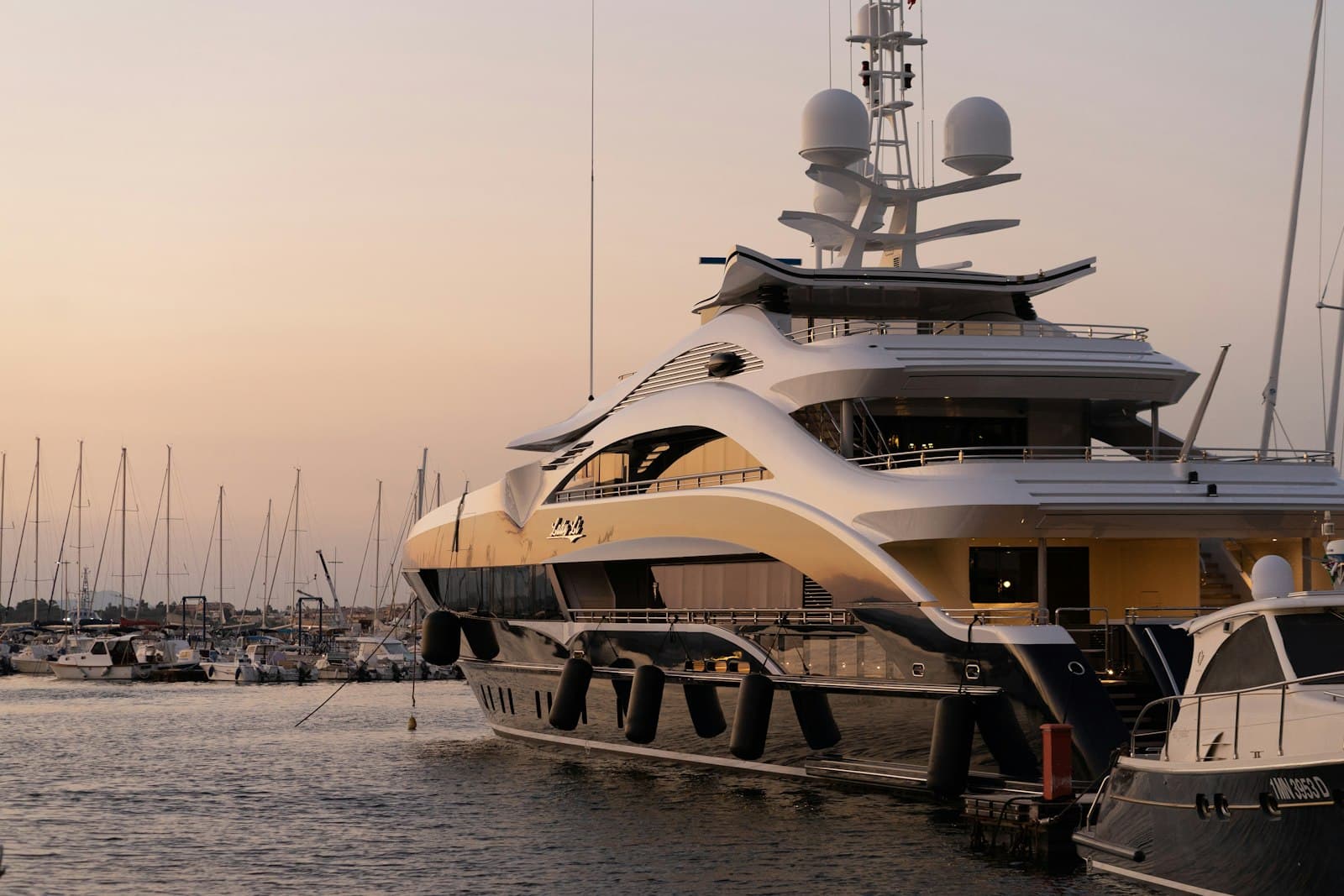
The major boat shows fall into two families: the end-of-season on-water shows — Cannes in early September, Monaco for big yachting, La Rochelle's Grand Pavois in autumn, Southampton and Fort Lauderdale for English-speaking markets — where you board boats afloat, and the indoor winter shows, dominated by boot Düsseldorf in January, the largest indoor boat show in the world. You visit the former to compare boats in real conditions, the latter for the sheer breadth of the offering — and you negotiate better in the closing days of either.
The annual calendar of the big events
The European boater's year follows a well-oiled cycle. January opens with boot Düsseldorf: some fifteen indoor halls, from paddleboards to superyachts, the world's largest concentration of exhibitors — and where yards unveil a good share of their new models. Spring belongs to regional shows and dealer-run sea-trial days. September is the big on-water month: the Cannes Yachting Festival opens the season with several hundred boats afloat and numerous world premieres, followed by the Monaco Yacht Show, dedicated to superyachts — more an industry gathering than a private buyer's show. Late September brings Southampton in the UK and, in early October, La Rochelle's Grand Pavois, the most approachable in atmosphere, with real space for sail and second-hand boats. Autumn continues with Barcelona, Genoa and Annapolis for sail, then Fort Lauderdale, the giant American on-water show, in late October. Check the dates every season: they move, and some shows do too.
On-water or indoor: two different uses
An on-water show presents the boat in its element: you judge the real lines, boarding from the pontoon, deck circulation, the headroom as actually felt — and with residual swell, stability in a marina stops being an abstraction. Indoor shows allow what water forbids: walking under the hull, inspecting keels, drives and underwater sections in the dry, comparing thirty boats in a day without pacing three kilometres of pontoons, and meeting every equipment maker — electronics, engines, deck hardware — in one place. The two are complementary: Düsseldorf to build your knowledge and shortlist, an on-water show to test that shortlist against reality. Our model files and the builder profiles are useful groundwork beforehand.
What a show really allows — and what it does not
A show is for comparing fast: in two days you can board fifteen boats, impossible any other way. It is also for meeting the yards — putting your questions on structure, lead times and after-sales to the people who build. It does not replace a sea trial: nobody sails during a show, apart from dedicated demo days some organisers run afterwards. Beware, finally, of the pontoon effect: a boat moored, polished and emptied of all cruising gear always looks bigger and brighter than it will in real use. And the September crowds make visits rushed: book time slots with the yards that genuinely matter to you.
Preparing your visit: the method
- Target five or six models a day at most, located in advance on the show map — the rest is browsing, pleasant but sterile;
- book appointments with the key yards two to three weeks ahead: an accompanied visit lasts 30 to 45 minutes, against 10 in the walk-up queue;
- come as a pair: one asks, the other notes and photographs — and ask the same questions at every stand to compare honestly;
- flat, light-soled shoes are required aboard most boats; bring water, and allow two days rather than one at a major show;
- keep half a day for the equipment halls: electronics and energy weigh heavily in a fit-out budget.
Negotiating at a show: myths and realities
The show discount exists, but rarely where people expect it. On the base price of a new boat, yards barely move: order books are healthy and price lists are public. The real negotiation happens on the package: options thrown in or discounted, electronics, canvas and upholstery, launch and delivery, extended warranty, sometimes a berth for the first season. The closing days beat the opening ones, and a buyer with a ready file — financing approved, programme clear — obtains more than a browser. Never sign on the day: show order forms are binding, and a price valid today only is a warning signal, not a windfall. Our guide to the buying process details the steps that follow, and a yacht buying service de-risks the bigger tickets.
Where to start
Pick the show to match your horizon. Buying more than a year out: Düsseldorf in January, to build the shortlist in the dry and in relative calm. Buying within the year: Cannes, Southampton or the Grand Pavois in September, to confront three finalists afloat, appointments booked. Just exploring: the nearest regional show is plenty for a first immersion. In every case, prepare the visit like a business trip — model list, written questions, framed budget — and leave the chequebook at home: what is a good deal on show Sunday is still one the following Tuesday, once the night has passed and the numbers have been checked.
Frequently asked questions
What is the biggest boat show in the world?
Indoors, boot Düsseldorf in January: some fifteen halls and the world's largest concentration of exhibitors across every boat family. On the water, the Cannes Yachting Festival leads Europe in September with several hundred boats afloat, while Fort Lauderdale plays that role on the American side in late October.
Can you sea-trial a boat during a boat show?
Generally no: boats stay moored during the show — you board, you do not sail. Some organisers and dealer networks run dedicated demo days after the event, and dealers arrange private trials in spring. Treat the show as a shortlisting exercise, never as a substitute for a sea trial.
Are prices really lower at boat shows?
Base prices barely move: yard price lists are public and order books full. The real margin sits in the package — options, electronics, commissioning, delivery, extended warranty — and mostly in the closing days. A buyer with approved financing negotiates better than average, but nothing justifies signing on the day.
Reading is the easy part. Then you have to decide.
A boat purchase turns on what you cannot see: the real history, the state of the hull below the waterline, how much room there is to negotiate. We represent you — independent of any seller, paid by you alone.