Electric, hydrogen, foils: boating's real trends
Electric is ready for day boats, hydrogen is still experimental, foils are going mainstream: an honest sort of real boating trends from marketing.
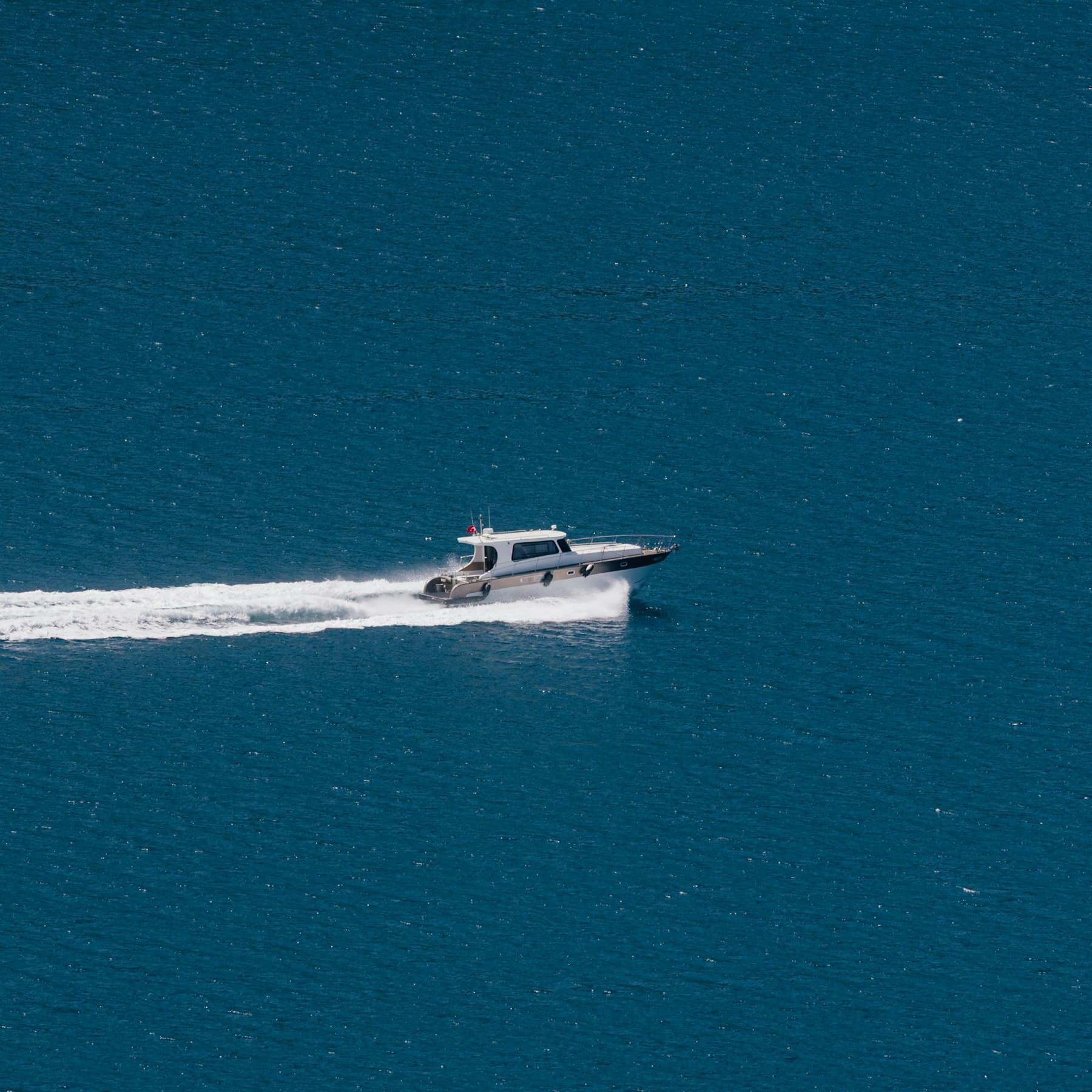
Three trends are genuinely transforming boating: electrification, already mature for day boats and shuttles; foils, moving from racing into series production; and sustainable materials, less spectacular but more structural. Hydrogen, meanwhile, remains at the demonstrator stage. Here is the honest sort between what is already changing recreational boating and what still belongs to boat-show announcements.
Electric: mature, but for a precise use case
The electric boat works very well where its brief is realistic: two-to-four-hour outings, moderate speed, dockside charging every evening. That is exactly the programme of lake, river and protected-coast day boats, where the offer grows every year. The limits remain physical: on the plane, range collapses — reckon, as an order of magnitude, 20 to 40 usable miles at sustained speed for many current models, against whole days at slow speed. The purchase premium, often 30 to 50% over a combustion equivalent, is partly offset by reduced maintenance and low running costs. Silence, no fumes, access to restricted zones: on the right programme, electric is no longer a gamble but a rational choice. And battery prices keep sliding year after year, which steadily widens the range of programmes where the numbers work.
Cruising and offshore: hybrid is the real transition
For cruising, physics rules: the energy density of batteries remains far below that of diesel, and no marketing claim changes it. The real transition is hybridisation: electric motors fed by optimised-rpm generators, large lithium banks, solar panels as standard and hydro-generation under sail. On cruising catamarans, this architecture is already common: you motor in silence for hours, diesel stays aboard for the crossings. By 2030, expect more refined, more frugal hybrids — not the disappearance of combustion offshore.
Hydrogen: the permanent demonstrator
Hydrogen works — harbour shuttles and experimental craft prove it — but three locks block series production: storage (high-pressure tanks, bulky and expensive, penalising boats where volume is precious), refuelling (practically no marina is equipped) and price, far above both combustion and battery-electric. The credible mid-term use cases are captive fleets — shuttles, workboats — that can justify their own filling station, and a few pioneering superyachts whose budgets absorb the experiment. For the private boater, hydrogen is a topic to watch, not to buy: nothing significant in series for several years yet. Methanol-fed fuel cells, easier to store and to refuel, may well reach production boats sooner than pure hydrogen does.
Foils: from racing to production boats
Foils have left the America's Cup. By lifting the hull, they cut drag and therefore fuel burn — claimed gains run from 20 to 40% at cruising speed depending on the design — while improving comfort in chop. Fast shuttles, premium cruisers and sporty day boats are now arriving in series with partial or retractable foils, managed by electronic ride-control systems. The trade-offs are real: mechanical complexity, specific maintenance, cost, greater vigilance around floating debris and draught. Foils will not become universal, but on fast programmes where fuel consumption matters, they have clearly moved in to stay.
Bio-based materials and end of life: the silent trend
The least visible trend may be the deepest. Flax and basalt fibres, partially bio-based resins, recyclable thermoplastics, certified plywoods: builders are moving progressively from fittings to structures. In parallel, the end-of-life question is becoming unavoidable: tens of thousands of polyester hulls are reaching the end of the road in Europe alone, and dismantling channels are organising, pushed by regulation that varies by country. For the buyer, the impact on new boats is still marginal; by 2030, recyclability will weigh on resale values, just as emissions standards eventually weighed on cars.
How to buy without picking the wrong era
A few rules for steering between enthusiasm and caution:
- Buy for today's usage, not for a five-year promise: a boat is chosen on a real programme.
- Short, regular outings with dockside charging: electric is already relevant. Cruising and offshore: diesel and hybrid remain the norm.
- On young technologies, check the battery warranty, its replacement cost and the builder's staying power — three factors that will drive resale value, as our guide to boats that hold their value explains.
- Compare the engine options available on the same model and price the full gap — purchase, energy, maintenance — rather than the list price alone.
The right question is not "which technology will win?" but "which one serves my programme, today, at a cost I accept?". That is the only compass that never goes out of date.
Frequently asked questions
Are electric boats the future of recreational boating?
They are already the present of one precise segment: day boats, shuttles and lake boats with short outings and dockside charging. For cruising and offshore use, battery energy density remains insufficient, and the transition will run through hybrids for at least a decade. Electric will gain ground use case by use case, not by wholesale replacement.
What is the real range of an electric boat?
It all depends on speed. At slow displacement pace, many models last a full day. On the plane, range drops drastically: reckon on the order of 20 to 40 usable miles at sustained speed for many current day boats. Manufacturer figures are often quoted at the most favourable speed: demand the full range-versus-speed curve before buying.
Why are boats fitted with foils?
Foils lift the hull partially or fully out of the water, which cuts drag. The result: fuel burn reduced by 20 to 40% at cruising speed depending on the design, more speed for the same power, and markedly better comfort in chop. In exchange, they add mechanical complexity, specific maintenance and a higher price.
Reading is the easy part. Then you have to decide.
A boat purchase turns on what you cannot see: the real history, the state of the hull below the waterline, how much room there is to negotiate. We represent you — independent of any seller, paid by you alone.