The Balearics by boat: Mallorca, Menorca, Ibiza
Mallorca, Menorca and Ibiza by boat: calas, mandatory posidonia buoys, the mainland crossing and real strategies for coping with the August crowds.
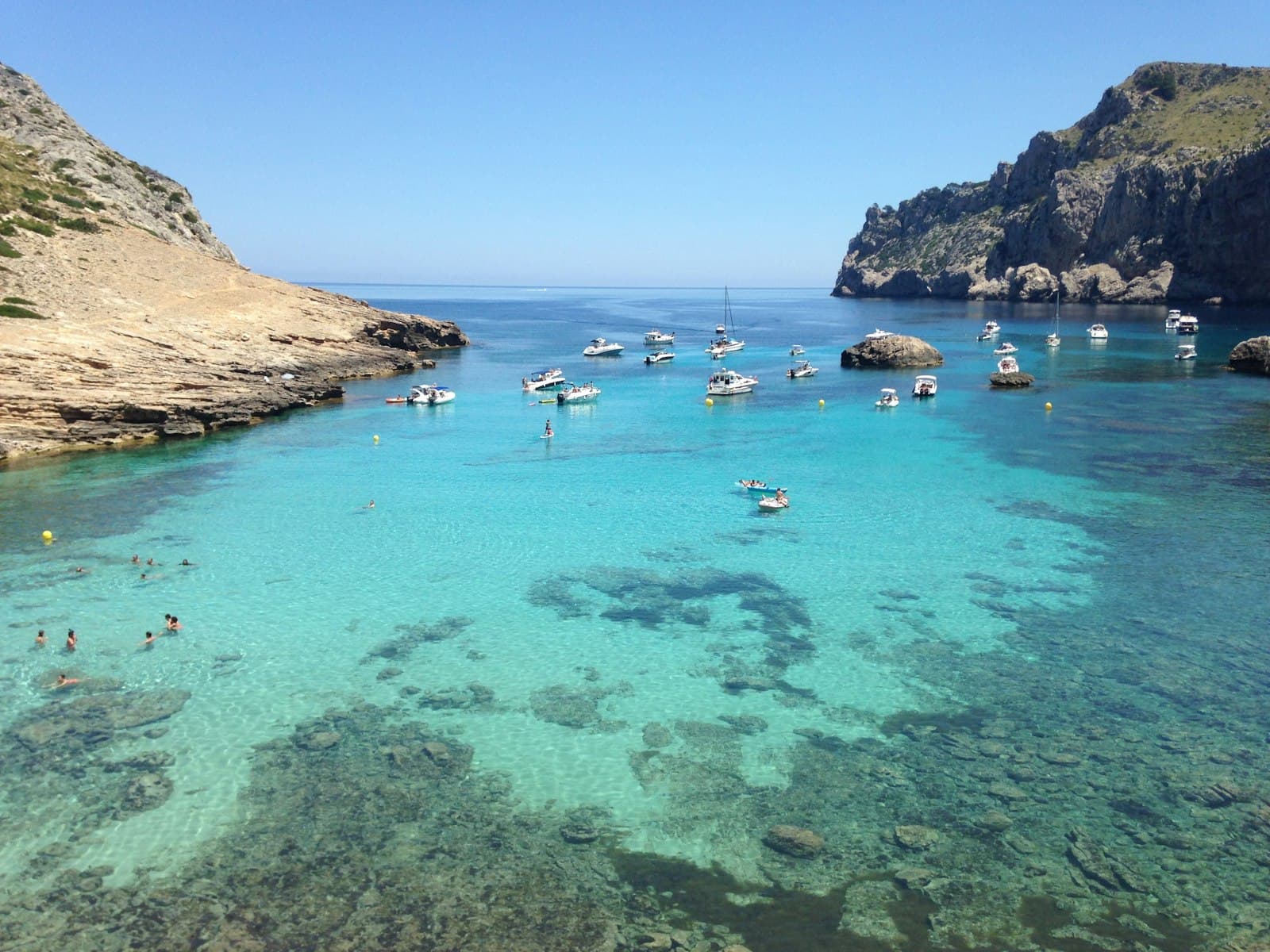
The Balearics offer three distinct cruising programmes: Mallorca for variety, from the wild Tramuntana coast to the south-east calas; Menorca for unspoilt nature; Ibiza-Formentera for turquoise water and energy. The crossing from the Spanish mainland runs 55 to 100 miles depending on your departure port. Two rules then shape every single day afloat: never anchor on posidonia seagrass, and book everything ahead in August.
Three islands, three personalities
Mallorca is the most complete: Palma, one of the western Mediterranean's great yachting hubs, the south-east calas (Mondragó, Cala Figuera), and the northern Tramuntana coast — forty miles of magnificent cliffs where Port de Sóller is the only real shelter. Menorca, a biosphere reserve, plays the nature card: the historic anchorage of Cala Taulera near Mahón, the bay of Fornells, the wild southern calas; it is also the island most exposed to the tramontana wind. Ibiza-Formentera is the star double act: Espalmador, the beaches of Ses Salines, genuinely Caribbean water — and the archipelago's highest density of dayboats and superyachts. Between the three, the channels are half-day passages: Mallorca-Menorca is about 20 miles at the narrowest point, Mallorca-Ibiza around fifty — enough to combine two islands over a fortnight without pushing the crew.
The crossing from the mainland
Three classic routes: Denia to San Antonio (Ibiza), 55 to 60 miles, the shortest — around ten hours at 6 knots; Valencia to Ibiza, about 90 miles; Barcelona to Sóller (Mallorca), about 95 miles, often done overnight. The channel between the mainland and the islands kicks up an unpleasant sea in established north-easterlies or south-westerlies: the weather window outranks the calendar. Watch the fast-ferry traffic, dense and quick — a proper AIS watch at night is not optional. And plan to arrive in daylight, with a couple of hours in hand: cala approaches are not done on instruments alone, and a first landfall deserves calm light and a rested helm.
Posidonia: the rule that shapes every anchorage
The archipelago protects its seagrass strictly: anchoring on posidonia is banned, patrolled in season and fined. In practice:
- anchor on the pale sand patches, easy to read in these waters;
- check the official seagrass maps on the dedicated apps before choosing your cala;
- use the regulated buoy fields in sensitive zones, bookable online and priced by boat length;
- in the Cabrera national park, south of Mallorca, advance authorisation and a mooring buoy are mandatory — slots are limited and go fast.
Zones and procedures change from one season to the next: check the rules in force before you sail.
August: living with the crowds
In August the archipelago runs at full capacity. The strategies that actually work:
- reach the anchorage before 11 a.m., ahead of the day-boat wave;
- sleep in the secondary calas and visit the headline spots during the day;
- avoid Formentera at weekends and aim for Tuesday or Wednesday;
- book berths and buoys several weeks ahead;
- or, better, shift the trip to June or September: the same water, half the people.
None of this makes August impossible — it makes it a game of timing. The crews who enjoy it are the ones who move early, anchor early and treat the marquee spots as lunchtime visits rather than overnight ambitions.
Budget: huge spreads from island to island
The Balearics have the most contrasted pricing in the Mediterranean: a 12-metre berth can cost 60 € a night in a secondary Menorcan harbour and several hundred euros in the marinas of Ibiza or Palma at the height of summer. Regulated buoys stay reasonable — in the region of 20 to 50 € depending on boat size. Anchoring on sand remains free: that is the archipelago's real luxury. To frame a full summer budget line by line, our cost calculator gives the orders of magnitude.
Where to start
Pick the island to match the crew: Menorca for quiet, Mallorca for variety, Ibiza-Formentera for atmosphere. Book buoys, berths and — for Cabrera — the park authorisation early. Download the seagrass maps before departure. If you are coming from the mainland, prepare the crossing as a genuine offshore passage: safety gear checked, window confirmed, crew rested. On the platform question, the archipelago is the kingdom of motor yachts and fast dayboats — the short distances suit them — but a sailing yacht comes into its own outside peak season. And if you are still weighing up basins, compare with our guide to Corsica by boat: wilder, less crowded, and just as demanding about where you drop the hook.
Frequently asked questions
Can you anchor at Formentera?
Yes, but only on sand: the posidonia meadows around the island are strictly protected, mapped and patrolled in season. Regulated buoy fields cover the most sensitive areas, including Espalmador — book online well ahead in summer. Over clear sand, anchoring remains free and unrestricted.
What is the best crossing to reach the Balearics by boat?
The shortest route runs from Denia to Ibiza: 55 to 60 miles, around ten hours at 6 knots. From Valencia count roughly 90 miles, and from Barcelona to Sóller about 95 miles, usually overnight. In every case, wait for a window without established strong wind and keep a sharp watch for fast ferries.
Do you need to book Balearic marinas in August?
Yes, and as early as possible: the marinas of Ibiza, Palma and Mahón fill up weeks ahead in August, and the regulated buoys in the star locations go just as fast. Without a booking, the fallback is anchoring on sand — arriving before 11 a.m. to find a decent spot.
The surest way to know a boat is to sail her.
Before you buy — or simply to get away this season. Tell us your dates and your cruising area, and we source the right boat through our network of owners and vetted fleets.