The boat survey: process, cost, what it reveals
What a pre-purchase survey covers, what it costs (about 1% of boat value), haul-out and moisture readings — and how to turn the report into leverage.
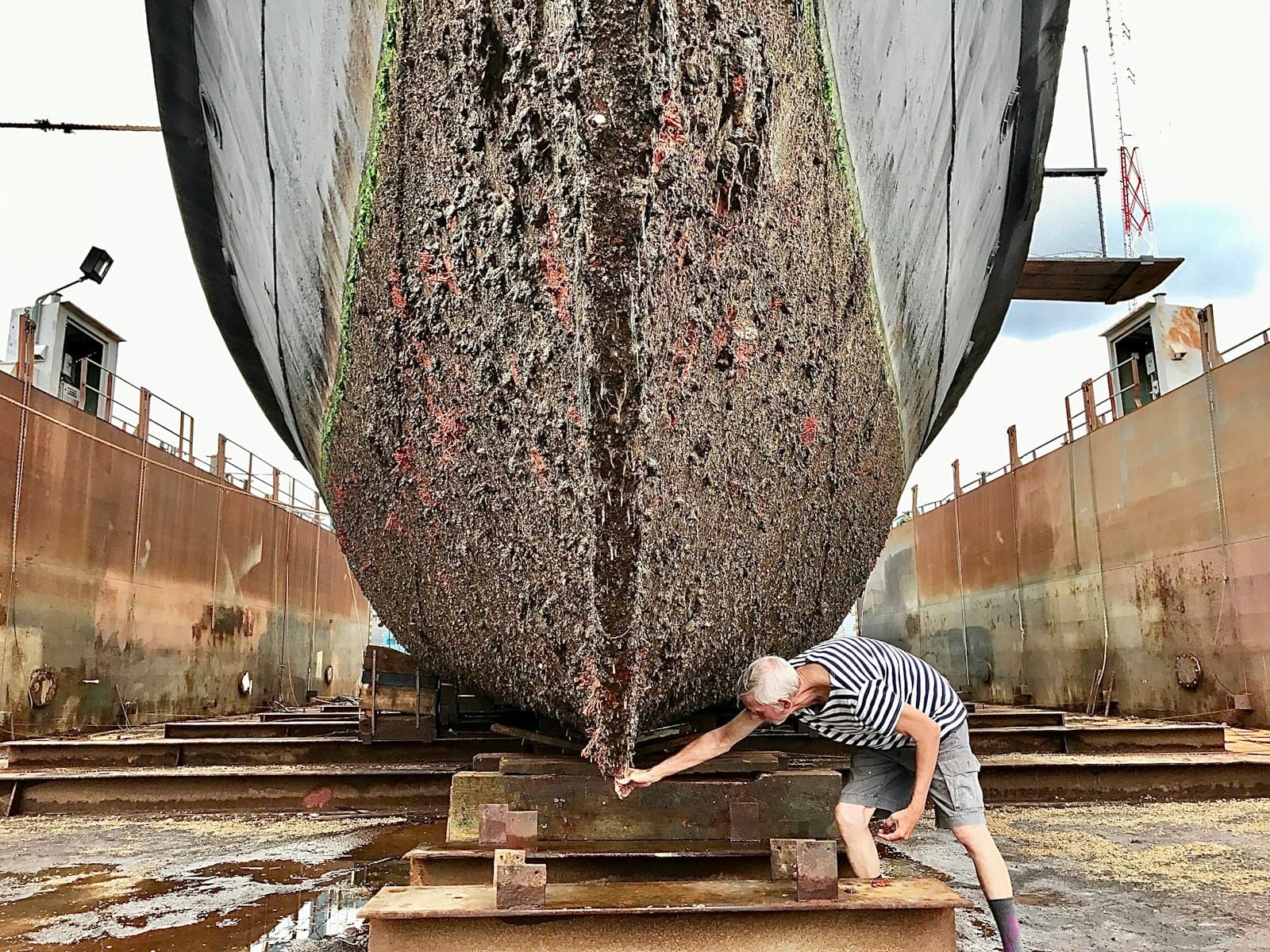
A pre-purchase survey costs, as an order of magnitude, 15 to 25 € per foot — 600 to 1,000 € for a 40-footer — excluding haul-out. It takes half a day to a full day and produces a written report: structural condition, hull moisture, systems, and a ranked list of the work ahead. It is the only objective snapshot of the boat before you buy — and your main lever for renegotiating the price. Skipping it to save a few hundred euros is the most expensive shortcut in boating.
What a surveyor checks (and what they cannot see)
The marine surveyor starts with the structure: hull, deck, floors, structural bulkheads, keel-to-hull joint, rudder, through-hulls. They take moisture readings on the laminate, tap-sound it to spot delamination, visually inspect the rig, examine the engine (appearance, leaks, mounts), the electrical circuits, the gas installation and the safety equipment. Let's be honest about the limits: a standard survey does not open up the engine — a separate mechanical survey exists for that —, does not dismantle the interior, and cannot rule out defects in inaccessible areas. It records the boat's condition at a point in time, with ranked reservations. That is already huge: most of the expensive surprises — osmosis, delamination, galvanic corrosion — are caught at this stage, as our guide to the invisible enemies explains.
Choosing your surveyor: independence first
Rule number one: the surveyor works for you and has no ties to the seller or their broker. Politely decline the 'usual surveyor' recommended by the other side — even if competent, the doubt alone poisons what follows. Look for a professional carrying professional indemnity insurance, accredited by a recognised surveyors' body in your region or under your flag, and ideally familiar with the type of boat: the fast-powerboat specialist is not necessarily the right person for a steel ketch. Ask for an anonymised sample report before committing: the precision of the writing says a lot about the rigour of the work. Finally, be wary of unusually low quotes — a rushed survey costs far more than it saves.
Haul-out, moisture meter, soundings: how it unfolds
A full survey includes a haul-out — lifting usually at the buyer's expense, 150 to 400 € depending on size and region — to inspect the underwater hull: gelcoat below the waterline, any osmosis blisters, anodes, propeller, shaft line, seacocks. A seller who refuses any haul-out should set off alarm bells: that is exactly where the expensive defects hide. The moisture meter maps the laminate's readings; high, localised values call for deeper investigation. Afloat, the surveyor works through deck, hardware, bilges, machinery and circuits. Allow half a day for a simple day-boat, a full day for an equipped cruising yacht; the sea trial ideally happens the same day. The written, illustrated report lands within one to two weeks.
Reading the report: ranking the reservations
A good report ranks its findings: safety defects to fix before sailing, short-term work, watch points, cosmetic remarks. Do not panic at a thirty-line list: no ten-year-old boat has a clean report, and an accumulation of small items is perfectly normal. Focus on three questions. Is there a structural defect? Does the cost of priority work exceed your refit provision? Does the boat match what the listing described? Ask the surveyor to talk you through the report as well; nuances rarely survive the written page. If the gap is major, the report protects you: that is exactly what the survey clause in the sale agreement is for.
From report to negotiation
The report turns impressions into costed arguments. Three possible outcomes: the seller fixes the defects before the sale; the price drops by the documented cost of the work — backed by quotes, not finger-in-the-air estimates; or you walk away with your deposit returned in full. In practice, safety defects and structural work negotiate well; normal wear on a boat of its age much less — a seller does not have to fund your comfort upgrades. Sellers rarely argue with numbers on a contractor's letterhead; they argue with opinions. The full method, model counter-offer included, is in our negotiation guide.
Where to start
- Budget the survey from day one: about 1% of the boat's price including haul-out — the best money spent in the whole purchase.
- Identify two or three independent surveyors in the boat's region before you even make an offer: in season, lead times stretch fast.
- Always word the offer 'subject to satisfactory survey and sea trial' and have that clause written into the sale agreement.
- Attend the survey in person: a day spent following the surveyor is a crash course on your future boat, and their spoken comments round out the written report.
Frequently asked questions
How much does a pre-purchase boat survey cost?
As an order of magnitude, 15 to 25 € per foot depending on region and boat type — 600 to 1,000 € for a 40-footer — plus 150 to 400 € for the haul-out. A separate mechanical survey of the engine adds a few hundred euros. Relative to the boat's price, the whole package comes to about 1%.
Who pays for the survey and the haul-out?
The buyer, in the vast majority of cases: the surveyor works for them and the report belongs to them. The lift-out is generally at the buyer's expense too, though it can be negotiated. A seller who refuses any haul-out should worry you: the expensive defects hide precisely below the waterline.
Is a survey mandatory when buying a boat?
No, there is no legal obligation in a private sale. However, many insurers require one to cover an older boat on an agreed-value policy, and lenders often ask for it too. Even when not required, skipping it to save a few hundred euros is the worst deal in boating.
Reading is the easy part. Then you have to decide.
A boat purchase turns on what you cannot see: the real history, the state of the hull below the waterline, how much room there is to negotiate. We represent you — independent of any seller, paid by you alone.