Osmosis, electrolysis, corrosion: the invisible enemies
Osmosis blisters, devoured anodes, rusting stainless: understand a hull's three invisible enemies, catch them early and know what the cures really cost.
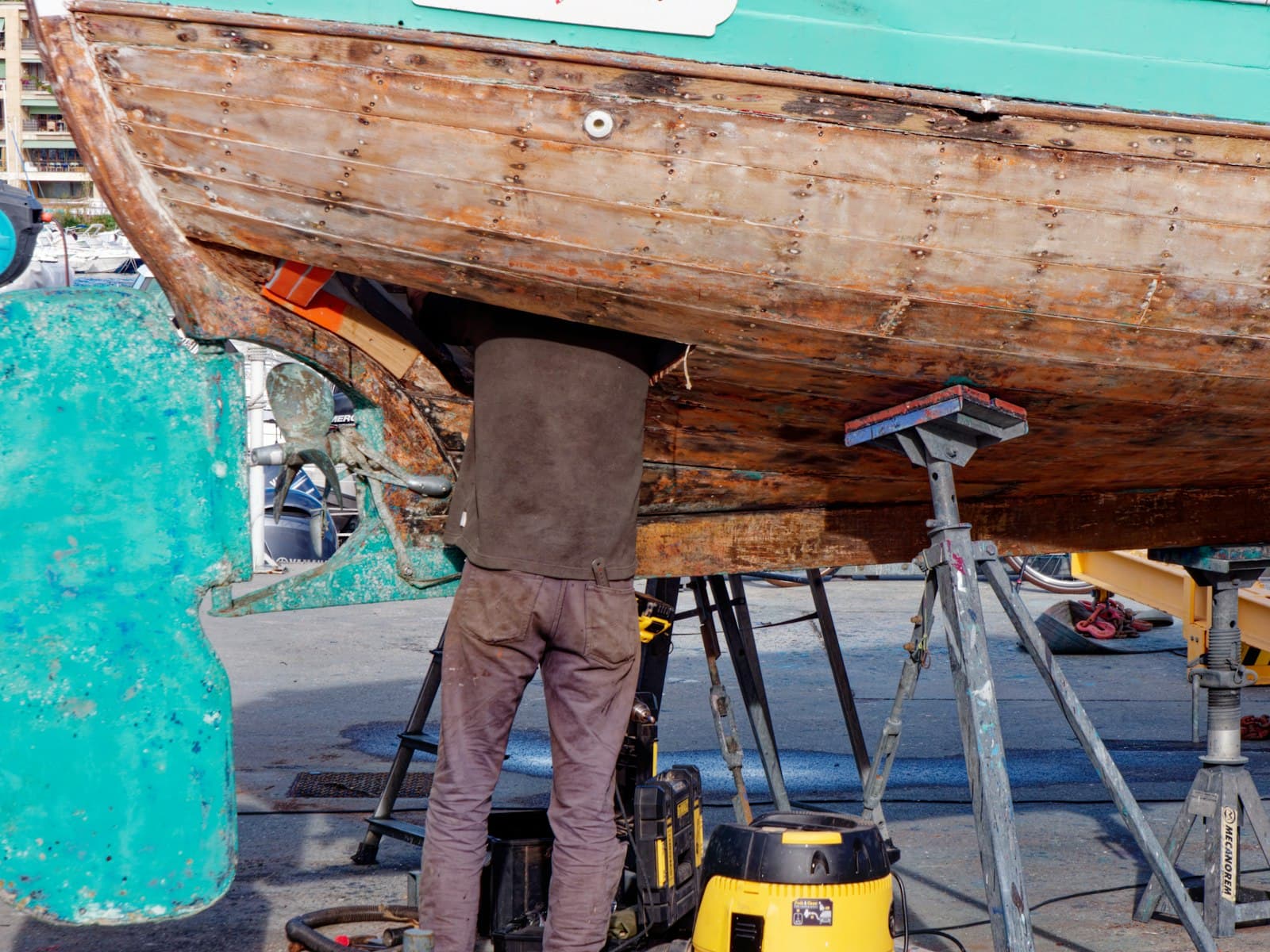
Three quiet phenomena work on a hull while its owner sleeps: osmosis, which blisters polyester; galvanic corrosion, which devours immersed metals; and the localised corrosions that pit stainless and eat aluminium. None is a death sentence, all can be caught early — and each has a precise price, which makes them negotiation arguments as much as maintenance topics.
Osmosis: the blister that scares buyers
Polyester is not perfectly watertight: over the years, water migrates into the laminate, combines with manufacturing residues and forms acidic pockets that swell — the famous blisters. Hulls from the 1980s-90s often show them; modern builds, protected by vinylester resins and thick gelcoats, largely escape. Key point: osmosis is slow and rarely structural. Scattered blisters don't stop a boat sailing for years; they get monitored, drained and dried. The full cure — gelcoat peeling, long drying, epoxy relamination — costs €400-800 per metre of hull: €6,000-10,000 for a 12-metre boat, a figure to set against the discount you ask for.
Catching it before you buy
That is the survey's job: moisture-meter readings on a hull hauled out for several days, hammer soundings, close examination below the waterline. High moisture without blisters is a warning; active blisters (acidic fluid, vinegar smell when pierced) are a quotation. Beware a freshly antifouled hull that may hide the clues — ask for pre-paint photos.
Galvanic corrosion: the accidental battery
Two different metals immersed and electrically connected form a battery: the less "noble" one sacrifices itself. That is precisely the role of the zinc anodes (aluminium in brackish water, magnesium in fresh) fitted to shaft, drive and hull: they corrode instead of your propeller and sail-drive. Simple rule: replace at half-consumed, inspect at every haul-out. Anodes devoured within months flag a fault — a leakage current aboard, a bad bonding connection, or the infamous berth neighbour whose badly wired boat "pumps" your protection through the shore power ground. A galvanic isolator on the earth wire, or better an isolation transformer, cuts that path for a few hundred euros.
Stainless and aluminium: localised corrosion
Stainless doesn't rust… as long as it breathes. Trapped under a fitting, a chainplate or badly bedded track, starved of oxygen and soaked in salt water, it develops pitting and crevice cracks — hence the rust weeps at stanchion bases, and a serious inspection point on standing rigging. Aluminium protects itself by oxidising, but hates direct contact with stainless or copper and copper-based antifouling, forbidden on such hulls: systematic isolation (sleeves, gaskets) and dedicated paints, as detailed in our hull materials guide.
The maintenance that prevents it all
The anti-corrosion routine is short: anodes checked at every haul-out, regular bottom jobs with a close inspection (antifouling included), leakage-current hunts (a multimeter is enough to start), fresh-water rinsing of deck hardware, and re-bedding any stainless that weeps rust. One hour of attention per season saves thousands in yard bills.
Steel and aluminium hulls: a different rulebook
Metal hulls swap osmosis for electrochemistry at full scale. Steel rusts from the inside out — condensation trapped behind insulation does more damage than seawater — so surveys focus on plate-thickness measurements and the state of internal paint. Aluminium hulls demand strict electrical hygiene: isolated circuits, no copper anywhere near the hull, dedicated anodes, and a wary eye on every marina's stray currents. Both reward disciplined owners with immense strength and longevity; both punish neglect faster than polyester ever will.
Where to start
On your own boat: photograph your anodes today and date the shot — their consumption rate is your best indicator. When buying second-hand: insist on a haul-out, a moisture meter and an expert eye below the waterline; price any defect found at the cost of its cure, not at the price of fear. The invisible enemies only beat owners who never look below the waterline.
Frequently asked questions
Does osmosis make a boat unsellable?
No. It is a common defect on older hulls, slow and rarely structural. It weighs on price — count the treatment cost, €400-800 per metre — but a properly treated boat, with a photo file to prove it, resells normally.
How often should anodes be replaced?
Inspect at every haul-out and replace at 50% consumption — in practice every one to two years in seawater. Abnormally fast wear (a few months) is not an anode problem: it is an electrical fault to diagnose.
Why is the stainless steel on my boat rusting?
Stainless protects itself with oxygen from the air. Trapped under a fitting with stagnant salt water, it develops pitting corrosion. Rust weeps at a stanchion base or chainplate call for removal, inspection and re-bedding — not just a polish.
Reading is the easy part. Then you have to decide.
A boat purchase turns on what you cannot see: the real history, the state of the hull below the waterline, how much room there is to negotiate. We represent you — independent of any seller, paid by you alone.