The refit: renovating an older boat, budget and priorities
Safety, structure, comfort: the right order for renovating an older boat, how to budget a refit honestly, and what it really adds at resale time.
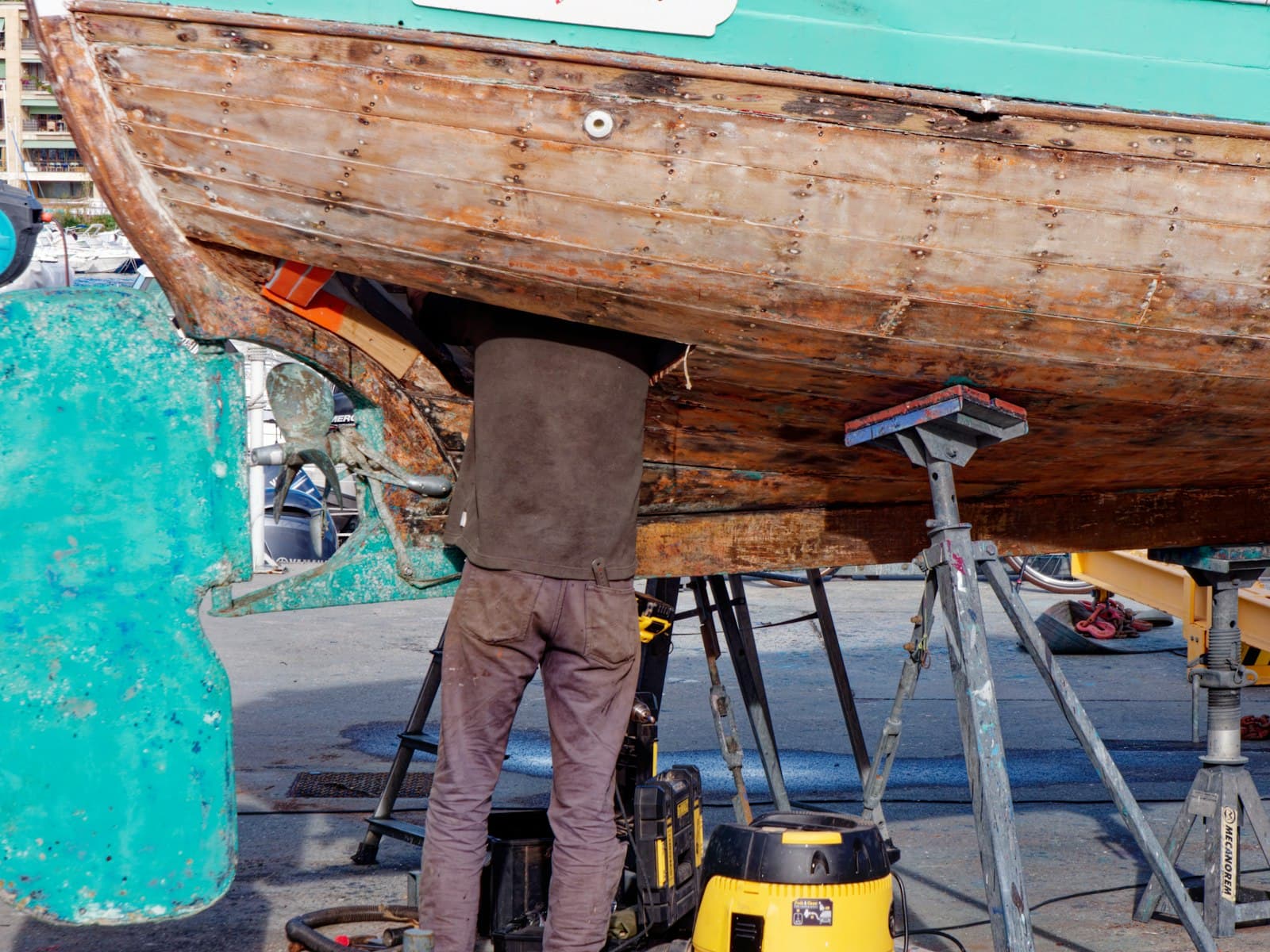
A refit is the full renewal of an older boat: safety, structure, systems, cosmetics. The golden rule fits in one sentence: safety first, structure next, comfort last. Budget without indulgence — a serious refit often costs 30 to 60 per cent of the boat's purchase price — and keep a 25 to 40 per cent margin for surprises.
Safety first: the non-negotiable list
Before the teak deck and the new upholstery, an older boat must be safe. The priority list is almost always the same: seacocks and through-hulls (seized or dezincified, they get replaced, not debated), the stern gland, standing rigging past 10-15 years, the entire gas installation, ageing wiring — terminals, circuit protection, battery bank —, bilge pumps and their cabling, and up-to-date safety equipment for your cruising area. None of this is spectacular or photogenic in a listing, which is precisely why so many second-hand boats need it. A thorough survey before purchase ranks these items and hands you the backbone of your refit plan — that is its real return on investment.
Structure and watertightness: the boat before the equipment
Second tier: everything that keeps the boat being a boat. Osmosis treated according to severity, localised delamination, cracked floors or inner moulding, chainplates and keel attachments, play in the rudder, and deck watertightness — ports, hatches, toerails — which slowly rots the plywood beneath. These jobs are thankless: expensive, invisible once finished, yet they condition everything else. Fitting a beautiful saloon under a leaking deck is furnishing a flooded basement. This is also the tier where professional diagnosis pays best: mistaking structural delamination for cosmetic osmosis can multiply the estimate fivefold.
Costing it: the method that avoids budget shipwreck
The honest method has four steps. One: list everything, item by item, from the survey report and your own notes. Two: cost each item at the top of the range — yard quotes for the big jobs, catalogue price plus 20 per cent for materials. Three: add a global margin of 25 to 40 per cent; a twenty-year-old boat opened up always reveals surprises. Four: add purchase price and refit together before signing, and compare the total with an equivalent boat already done — the conclusion is sometimes humbling, but better before than after. A few orders of magnitude for a 37-40 ft sailboat: repowering EUR 15,000-25,000 installed, standing rigging EUR 4,000-6,000, complete rewiring EUR 5,000-10,000, hull repaint EUR 5,000-15,000. The cost-of-ownership calculator then helps you project the years that follow.
DIY or yard: where the border runs
Doing it yourself divides the bill by two or three, since labour is often half of a yard quote. But the sensible border is fairly clear. Within reach of a careful amateur: sanding and painting, varnish, simple upholstery, deck hardware, 12 V electrics with method and good diagrams. To be delegated unless you have genuine competence: heavy mechanics — repowering, shaft lines —, rigging, structural and laminating work, gas, and anything that affects the boat's insurability. Think about real elapsed time too: an amateur refit done at weekends easily stretches over two or three seasons, during which the boat does not sail but keeps paying for its berth. Refits abandoned halfway are sold as-is, and at a loss.
What a refit really returns at resale
Let us be plain: a refit is rarely recovered in full when you sell. What holds value best: a recent engine with invoices, new rigging, modern electronics, recent sails — everything that spares the buyer an immediate yard bill. What recovers poorly: hours of invisible labour, highly personal interior arrangements, solid teak fitted out of passion. A renovated older boat sells faster and for more than a tired one, but the gap rarely covers everything you spent. The right reason to refit is to sail a safe, sound boat you love — not to hope for a capital gain.
Where to start
- Start from a survey or a complete condition report, and sort every item into three columns: safety, structure, comfort.
- Cost everything at the top of the range, add the 25-40 per cent margin, and set the total against the boat's final value.
- Phase the programme: season one safety and reliability, season two structure and systems, season three cosmetics — the boat sails between stages.
- Document everything with photos and invoices: it is your resale file as much as your technical memory.
- And if the total exceeds the price of an equivalent boat already sound, have the courage to change boats rather than bury yourself in the yard.
Frequently asked questions
How much does a refit cost on a 40 ft sailboat?
It depends on the starting condition and the ambition, but a serious refit often runs to 30-60 per cent of the boat’s purchase price. Some markers: repowering EUR 15,000-25,000, standing rigging EUR 4,000-6,000, complete rewiring EUR 5,000-10,000, hull repaint EUR 5,000-15,000. Add a 25-40 per cent margin for what the opened-up boat reveals.
Does a refit increase a boat’s value?
It raises the value and above all the saleability, but rarely by as much as you spent. A recent engine, new rigging and modern electronics hold value best; invisible labour and highly personal interior choices recover poorly. Refit to sail a safe boat, not in the hope of a capital gain.
Where should a refit of an older boat begin?
Always with safety: seacocks and valves, rigging, gas, wiring, bilge pumps. Then structure and watertightness — osmosis, deck, chainplates — and only after that comfort and cosmetics. A full survey up front ranks the work and serves as the backbone of the budget.
Your boat can pay for its own berth.
A few chartered weeks a year are often enough to cover the berth and the maintenance. Vetted charterers, secured deposits, and your rules — you keep the calendar.