Living aboard full-time: the real daily life
Living aboard full-time: realistic monthly budget, legal address, winter, damp and the liveaboard community. What daily life afloat really involves.
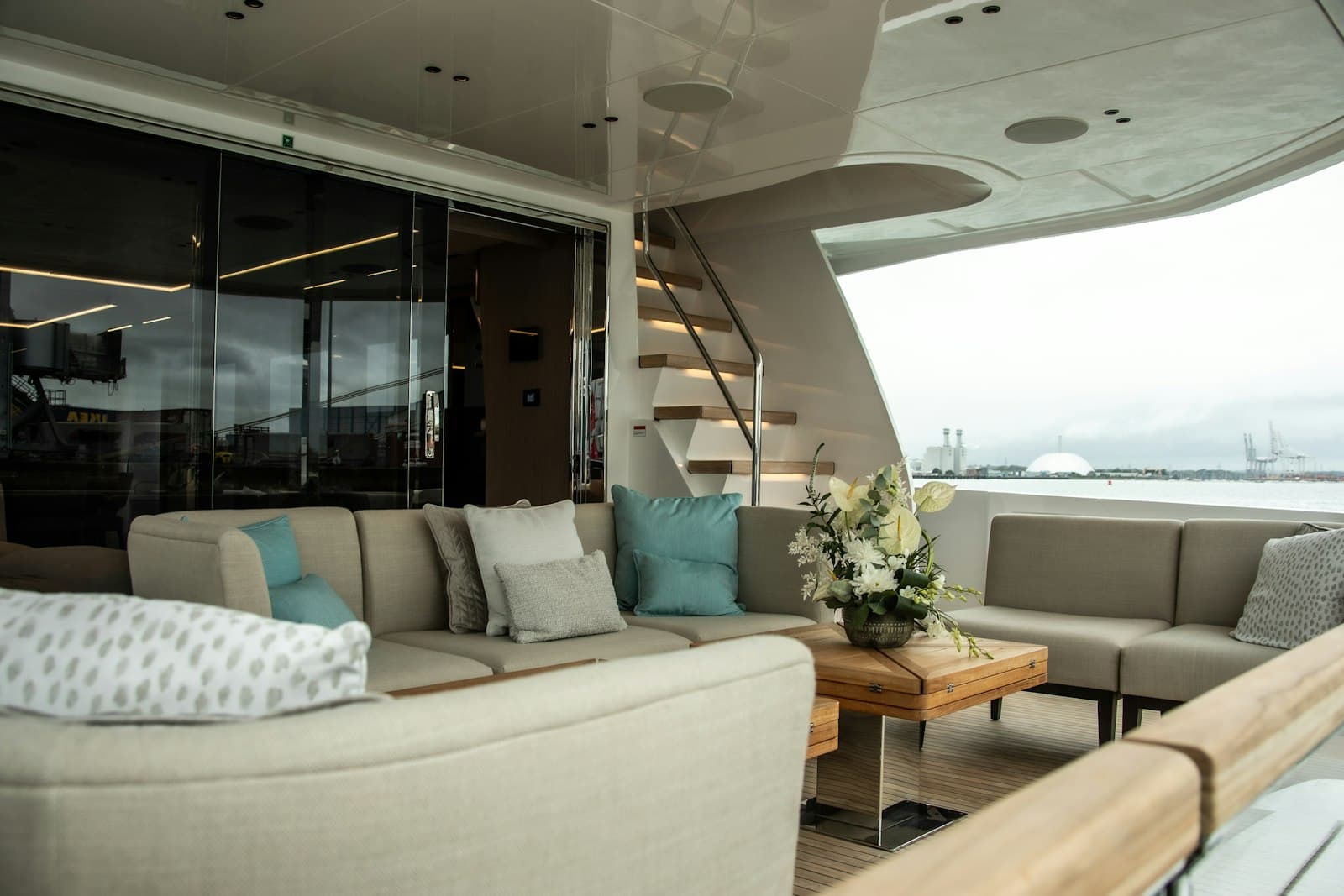
Yes, you can live aboard a boat full-time, legally and sustainably, in most of Europe and beyond. Budget roughly 700 to 1,500 euros per month excluding the boat itself, and take three subjects seriously: your legal land address, damp, and winter. The rest — small space, managing water and power — is learned in a few months.
What full-time boat life actually changes
A 40-footer offers 25 to 35 square metres of living space, the equivalent of a studio flat — but one where every resource is metered. Water comes from tanks or the dock, electricity from batteries or shore power, and storage is negotiated centimetre by centimetre. You stop storing and start choosing, and heating, cooking and hot water become conscious decisions rather than background utilities. In exchange: mooring fees often below coastal-city rent, the sea at your porthole, and a home you can move. Liveaboards describe the same curve everywhere: three months of sometimes rough adjustment — shopping on foot, laundrettes, marina showers — then a daily life that simply feels normal. The real filter is not comfort: it is accepting permanent logistics, where filling tanks and hauling rubbish are part of the week just like work is.
Legal address, mail and paperwork
A boat is not an address. For banking, taxes, vehicle registration or school enrolment, you need a land address: a relative, a mail-forwarding or domiciliation service, or, in some countries, an official scheme for people without fixed housing. Some marinas will hold your mail; few will serve as a legal address. Just as important: read your marina contract. Many officially restrict permanent living aboard while tolerating it in practice, charging a liveaboard fee and metering utilities. Get your status agreed in writing with the harbour office rather than living in a grey zone — it is also what secures continuous shore power through the winter, when you will need it most.
Winter and damp, the two real enemies
Damp is the liveaboard's number-one problem: condensation on the hull, wet mattresses, mould at the back of lockers. The remedies are known and cumulative: ventilate every day even at 5 °C, heat continuously at low temperature rather than in bursts, run an electric dehumidifier when on shore power, insulate cold spots around berths and lift mattresses on ventilated underlays. For heating, three options dominate: diesel forced-air heaters, economical and seamanlike; solid-fuel or drip-feed stoves, cosy but demanding; electric heaters, simple whenever the dock supplies power. A winter aboard is prepared in October, not December — much of the routine overlaps with winterising.
A realistic monthly liveaboard budget
Orders of magnitude for a 36-40 ft boat in Western Europe: berth 250-600 euros per month depending on the coast, insurance 60-120, water and electricity 30-80, smoothed maintenance 150-300, connectivity 40-100, laundry and sundries around 50. Running total: 700 to 1,500 euros per month — more on glamour coastlines or with a large catamaran, notably less at anchor or on rivers. Our cost-of-ownership calculator lets you run your own numbers. The classic trap is under-budgeting maintenance because the boat "is sound": it is, right up until the windlass dies on a November Sunday. Add loan repayments on top if you financed the boat, and a separate fund for the annual haul-out. Keep a 20% margin for the first year — it is always the most expensive one.
The liveaboard community, an under-rated asset
On every liveaboard pontoon you will find an amateur electronics wizard, a retired rigger and someone who has already had your exact breakdown. That mutual aid — shared tools, watching absent neighbours' boats, local knowledge — is worth real money and real morale. Sailing associations, marina groups and forums complete the picture. Living aboard alone is perfectly feasible; living aboard isolated is miserable, especially in February. Choosing the marina therefore matters as much as choosing the boat: pontoon culture, decent showers, shops within walking distance, and how the harbour office genuinely treats its liveaboards.
Where to start
- Test a winter, not a summer: borrow or rent a liveaboard-capable boat for a week in January — the only trial that counts.
- Find the marina before the boat: work, school, car and berth availability shape your daily life more than the brand on the hull.
- Choose a boat designed for living — headroom, insulation, storage: our guide to boats to live aboard details the criteria.
- Sort out your land address and notify your bank and insurer before moving aboard.
- Meet the liveaboards on your target pontoon: ten minutes of conversation teaches more than any forum thread.
- If you work remotely, plan connectivity seriously: see internet and remote work at sea.
Frequently asked questions
Is it legal to live aboard a boat full-time?
In most countries, yes: no law forbids living on your own boat. In practice it is each marina's rules that govern permanent living aboard: some restrict it, many tolerate it with a liveaboard fee and metered utilities. At anchor, local zoning and time-limit rules apply. Always get your situation agreed in writing with the harbour office.
What monthly budget do you need to live on a boat?
For a 36-40 ft boat in a marina, budget 700-1,500 euros per month: berth (250-600), insurance, energy, smoothed maintenance and connectivity. Costs drop significantly at anchor or on rivers, and climb on fashionable coastlines or with a large catamaran. Keep a 20% margin for the first year, which is always the most expensive.
How do you handle a legal address when living aboard?
Three common solutions: using a relative’s address, a private mail-forwarding or domiciliation service, or an official scheme for people without fixed housing where your country offers one. Marinas can often hold mail but rarely serve as a legal address. Remember to notify your bank, insurer and tax office of your change of situation.
The surest way to know a boat is to sail her.
Before you buy — or simply to get away this season. Tell us your dates and your cruising area, and we source the right boat through our network of owners and vetted fleets.