A boat to live aboard: the criteria that change everything
Living aboard changes every criterion: interior volume, insulation, power, storage and winter in the marina matter more than pure sailing performance.
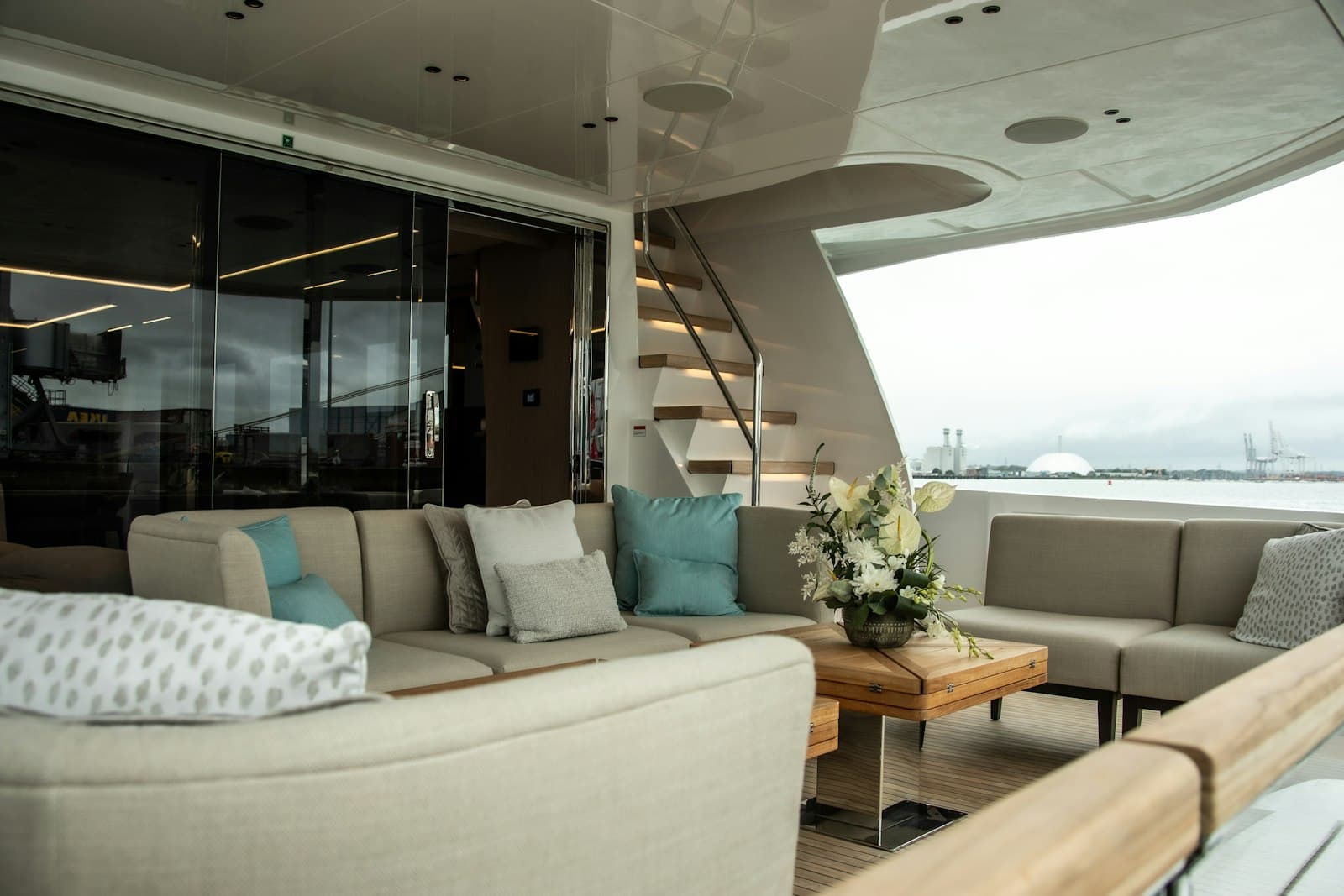
A boat you live on is not chosen like a boat you holiday on: interior volume, insulation, energy autonomy and stowage come before pure performance. The arithmetic is simple: a liveaboard spends 300-350 days a year alongside or at anchor, and 15-30 days actually under way. The boat must first be a home that can go to sea — not the other way round.
Volume versus seakeeping: a trade-off to own
The first criterion is headroom — 1.90 m everywhere you live standing up. Then comes real volume: saloon width, galley size, a cabin where two people can get dressed. Modern beamy, hard-chine hulls offer spectacular volume at the price of livelier behaviour at anchor. It is a trade-off to accept: a narrow, seakindly sailing yacht built for ocean work will frustrate you in the marina, while an apartment-boat will be uncomfortable hard on the wind. Unless an ocean crossing is imminent, experienced liveaboards choose volume — and the catamaran, where budget and berth allow, combines floor area with rock-steady comfort in port. Be wary too of charter-style cabins, designed for a week's sleep rather than a life's storage: measure the berths and test the sitting headroom in the bed.
Insulation and damp: the judges of winter
This is the most underestimated criterion, and the one that decides quality of life from November to March. An uninsulated GRP hull turns the boat into a cold wall: condensation on the hull sides, mould in the lockers, damp bedding. Look for — or plan to fit — hull-side insulation in the cabins, double-glazed or secondary-glazed ports, and permanent ventilation: it is the pairing of heating with air circulation that keeps a boat dry. Nordic-built boats and insulated aluminium yachts have a head start here. A simple test when visiting in cold weather: run a hand along the hull side inside a locker — if it comes back wet, you have just met your winter. Budget to insulate a 40-footer properly: a few thousand euros in materials and a great many hours of labour.
Power and water: daily life sizes everything
Living aboard year-round, electrical consumption bears no relation to summer cruising: laptops, heating, refrigeration, five hours of lighting every evening. Do an honest energy audit; it usually points to a 400-800 Ah battery bank (lithium is steadily becoming the default), 400-800 W of solar and a serious shore-power charger. Water follows the same logic: 300 litres of tankage is fine in a marina, but a life at anchor calls for 500 litres or a watermaker. Think about laundry and showers too: a family easily runs through 100 litres of water a day aboard, against 20 for a disciplined cruising couple. These items add up fast: fold them into the total budget with the cost of ownership calculator.
Stowage: think in cubic metres
Life aboard demands what no holiday boat provides: a four-season wardrobe, tools, spare parts, paperwork, sports gear, food stores. Visit like a removals firm: open every locker, estimate the dead volumes under the sole, check there is a genuine hanging locker and a workshop corner, however tiny. Ex-charter boats, optimised for berth count, are usually the poorest in stowage; long-range cruisers and trawlers the most generous.
Winter in the marina: the real test
Wintering aboard means an annual berth — negotiated early, because waiting lists are long in the lively harbours —, properly sized heating (a diesel forced-air unit most often, 2-4 kW for a 40-footer) and an anti-damp routine: air the boat daily, heat continuously rather than in bursts, lift the mattresses. Check the marina's policy too: not all officially accept liveaboards, and shore power may be metered separately. Finally, budget for a small electric dehumidifier: plugged into shore power, it transforms winter life for a few dozen euros of electricity a season. Our guide to living aboard full-time covers this daily reality in detail.
Where to start
- Rent or borrow a boat in a marina in winter for a week: the experience is worth every article ever written.
- List your non-negotiables as housing (headroom, berth size, a desk, a separate shower) before any nautical criterion.
- Draw up your energy audit and a realistic monthly budget, berth included.
- Visit boats that are actually lived on: their owners will show you what works and what is missing.
- Give the project a trial year before selling the house: keeping an exit open costs little and removes the pressure.
The right liveaboard boat is the one that is still pleasant on a wet Tuesday in January — not just on an August Saturday.
Frequently asked questions
Can you live aboard a boat year-round?
Yes, thousands of people do. You need a marina whose rules accept liveaboards (or a local tolerance), an arrangement for your official address and mail — the specifics depend on your country —, and a boat equipped for winter: heating, insulation, ventilation. Check the marina's policy before buying the boat.
What size boat do you need to live aboard?
Solo, life is comfortable from about 30-33 feet; for a couple, 36-43 feet is the most common bracket; for a family, 43 feet and up, or a catamaran. Beyond length, usable volume and stowage are what count: a beamy, well-designed 40-footer houses you better than a narrow 46.
Sailing yacht or catamaran for living aboard?
The catamaran offers the floor area, dockside stability and light of an apartment, but costs markedly more to buy and to berth. The monohull remains the economical choice and the easiest to place in marinas. The right call rests on the total five-year budget — purchase, berth and upkeep combined.
Reading is the easy part. Then you have to decide.
A boat purchase turns on what you cannot see: the real history, the state of the hull below the waterline, how much room there is to negotiate. We represent you — independent of any seller, paid by you alone.