Mandatory safety equipment: inshore, coastal, offshore
Tiered safety gear explained: what to carry inshore, coastal and offshore, expiry dates to track, liferaft budget and smart stowage on board.
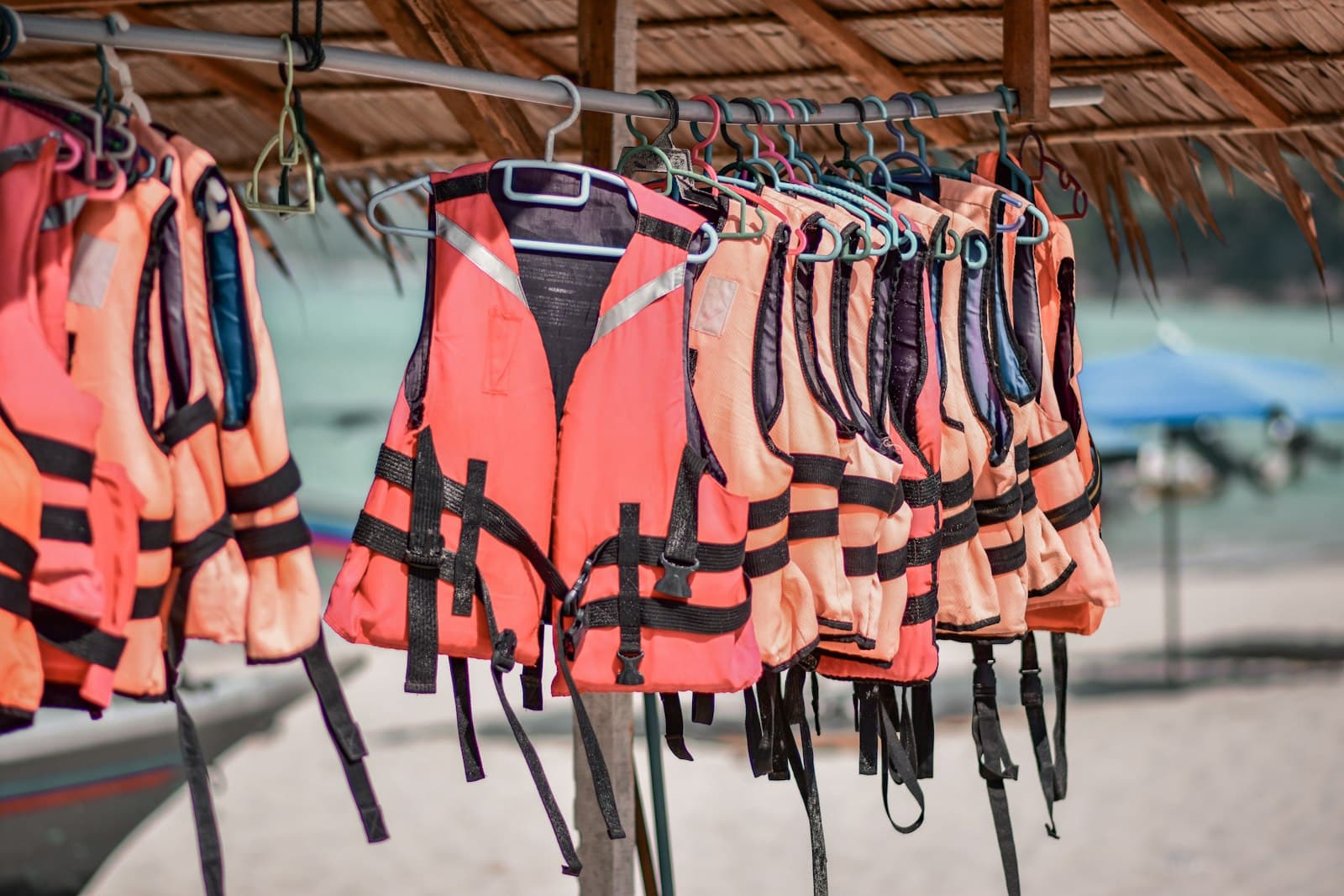
Mandatory safety equipment is the gear a pleasure boat must legally carry, and virtually every flag state scales it by distance from shelter: a minimal inshore kit close to harbour, a coastal kit for day-sailing range, and a much fuller offshore kit beyond that. Under the French flag the reference text is Division 240; the UK, US and most other administrations apply the same tiered logic with different labels. The principle is universal: the farther you are from rescue, the more self-sufficient you must be.
Distance from shelter, not boat size
Most regulations do not reason by boat length but by distance from a place of refuge — a harbour, a protected anchorage, anywhere the crew can reach safety. A 6-metre RIB crossing to an island 10 miles out needs the offshore-grade kit, exactly like a 14-metre sailing yacht. The skipper chooses the operating zone for the day, and with it the required equipment level.
Two practical consequences follow. First, your equipment defines your playground: without a liferaft, many flags simply forbid you from sailing beyond the coastal limit. Second, the official list is a legal minimum, not an optimum — nothing stops you, and everything encourages you, to carry more.
The inshore kit: staying close to harbour
This is the baseline for any boat, even a fishing trip in sight of the breakwater:
- a personal flotation device of 50 N minimum per person, or a worn wetsuit where accepted;
- a waterproof light for locating people at night;
- firefighting equipment matched to the engine installation;
- a bailing device (bucket or pump) unless the boat is self-draining;
- a towing point and a suitable towline;
- an anchor and rode appropriate to the boat, small dinghies excepted;
- the national ensign once outside territorial waters.
The whole list fits in one locker. It also only covers pottering along the shore: any more ambitious plan means stepping up a level.
The coastal kit: typical day-sailing range
The coastal tier builds on the inshore list for waters where help is no longer minutes away: lifejackets of 100 N minimum, red hand flares, a magnetic compass, paper or equivalent charts of the area, the collision regulations and a buoyage reference. A dedicated light for spotting a person in the water at night is usually added.
This is the kit most owners actually need: day trips, hops between neighbouring harbours. It fits in one or two dry bags and costs, as an order of magnitude, a few hundred euros to assemble from scratch.
Offshore tiers: where the list gets serious
Beyond typical coastal limits, expectations rise sharply: 150 N lifejackets, a liferaft, a fixed VHF, a compliant first-aid kit, parachute rockets and smoke signals, harnesses and tethers on sailing yachts, plus full navigation documents including tide tables and a logbook. For true ocean passages, most flags add a waterproof handheld VHF as backup and further publications. Always check the current version of your flag's text — these lists are revised regularly.
The big-ticket item is the liferaft: expect 1,500 to 3,000 € to buy a 6-person model, plus periodic servicing at an approved station, often 150 to 400 € per service. It is a real budget line, worth including from day one — our cost of ownership tool accounts for it.
Expiry dates: the forgotten calendar
A complete but expired kit protects nobody — and exposes you to a fine at a sea check:
- hand flares, rockets, smoke signals: roughly 3 years of validity, date printed on each unit;
- inflatable lifejackets: CO2 cylinder and firing mechanism to check yearly (see our guide on lifejackets and harnesses);
- liferaft: mandatory periodic servicing at an approved station;
- extinguishers: regular inspection, replacement per the manufacturer's schedule;
- first-aid kit: dated dressings and products to renew.
Make a full annual check a habit, ideally at spring launch, and log every expiry date in your phone.
Where to start
Take an honest look at your actual programme: if you never sail beyond coastal limits, skip the liferaft but build a flawless coastal kit. Store everything in dedicated, reachable containers — a waterproof flare bag, lifejackets within arm's reach rather than under a bunk — and brief every crew member on where the gear lives before casting off. When buying a used boat, audit the existing equipment: an out-of-service liferaft and expired flares are classic hidden costs, something we check systematically in our yacht buying service. For the regulatory vocabulary, keep our glossary at hand.
Frequently asked questions
What is the difference between coastal and offshore safety kits?
The coastal tier (roughly up to 6 miles from shelter) requires 100 N lifejackets, hand flares, a compass and charts. Beyond that, you add a liferaft, 150 N lifejackets, a fixed VHF, a first-aid kit and heavier pyrotechnics. The liferaft is the real dividing line, both legally and financially.
Is a liferaft mandatory on a pleasure boat?
Under most flags, yes, as soon as you sail beyond coastal limits (about 6 miles from shelter under the French flag). Closer in, it is not required but remains wise for committed programmes. It must be serviced periodically at an approved station to stay valid.
What happens if a sea check finds your safety equipment incomplete?
A sea check by the coastguard or maritime police can result in a fine and, in serious cases, an order to stay in port until the boat complies. Expired equipment is treated the same as missing equipment.
Your boat can pay for its own berth.
A few chartered weeks a year are often enough to cover the berth and the maintenance. Vetted charterers, secured deposits, and your rules — you keep the calendar.