Lifejackets and harnesses: choosing and wearing them right
50, 100, 150 or 275 N: how to pick a lifejacket, automatic vs manual, yearly maintenance, fitting children and knowing when to actually wear it.
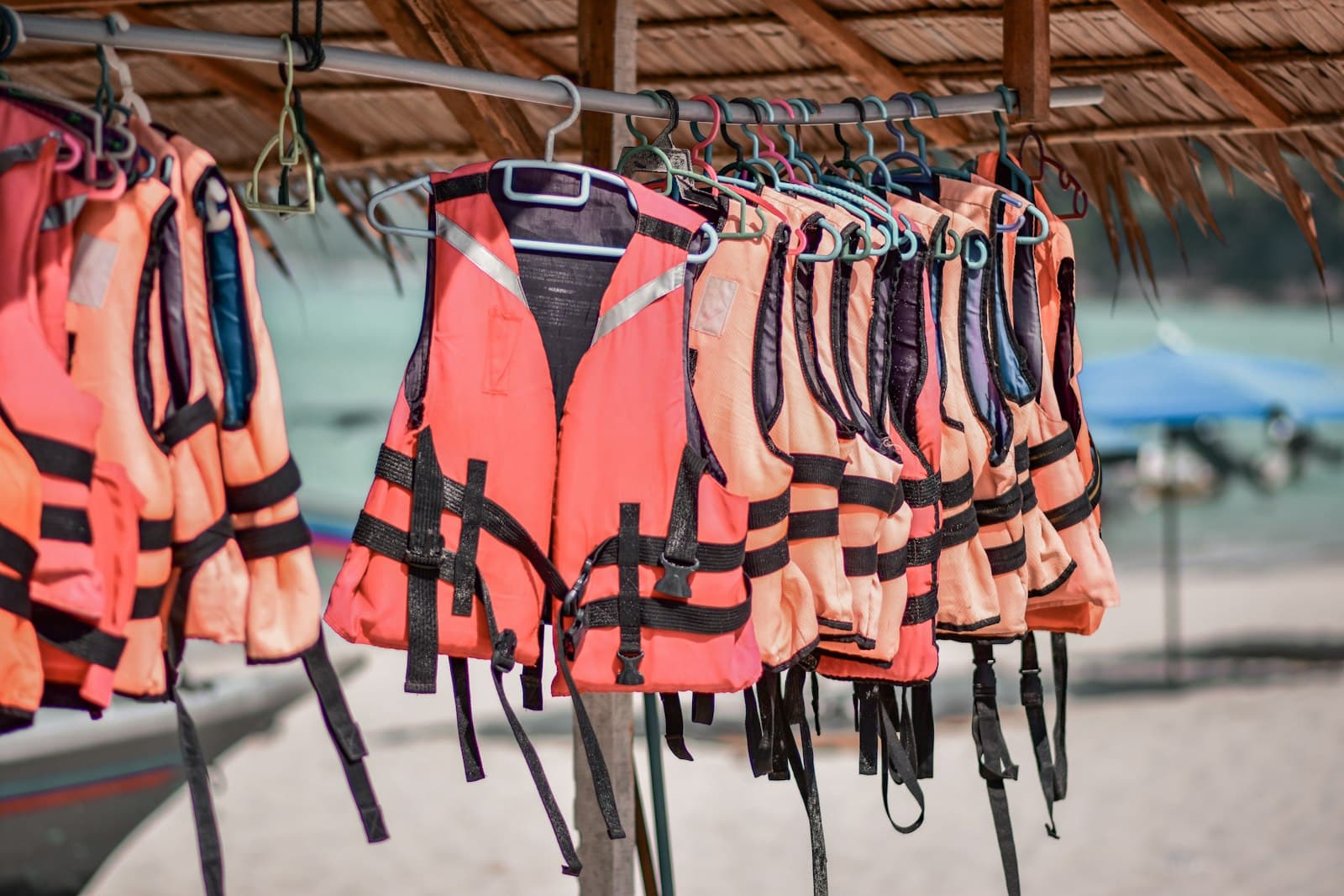
A lifejacket is chosen first by its buoyancy, measured in newtons: 50 N buoyancy aids for sheltered waters, 100 N for coastal sailing, 150 N for offshore work, 275 N for extreme conditions or heavy clothing. But the decisive criterion lies elsewhere: the best lifejacket is the one you actually wear, not the one sleeping under a bunk. That is why inflatable jackets dominate — they are comfortable enough to be forgotten on your shoulders.
Newtons, the only scale that matters
A newton measures the upward force keeping you at the surface. A clothed adult needs roughly 100 N to float with their head clear of the water; the higher ratings exist to turn an unconscious body face-up and to compensate for waterlogged clothing.
- 50 N: buoyancy aid (swimmers, sheltered waters, watersports); will not turn an unconscious person;
- 100 N: coastal lifejacket, foam or inflatable;
- 150 N: the offshore standard, turns most unconscious wearers face-up;
- 275 N: serious offshore use, heavy foul-weather gear, cold water.
Most flag states tie these ratings to navigation zones — 50 N close to shelter, 100 N coastal, 150 N offshore under the French rules, with equivalents elsewhere. The full picture is in our guide to mandatory safety equipment.
Automatic or manual inflation?
An inflatable jacket fires by puncturing a CO2 cylinder. In the automatic version, a water-sensitive element triggers the firing mechanism on immersion: the right choice for almost every cruising sailor, because someone knocked out by the boom or gasping in cold water does not always pull the handle. Manual versions mainly suit people constantly soaked by spray or capsizing on purpose — dinghy sailors, towed watersports — where accidental firings become a nuisance.
An often-ignored point: a fired inflatable can be rearmed. A spare cylinder and trigger element cost roughly 20 to 40 €, against 100 to 250 € for a good 150 N jacket. Keep a rearming kit aboard.
Harness and tether: staying on board comes first
The lifejacket saves you once you are in the water; the harness keeps you out of it. Most quality inflatable jackets integrate a harness with a D-ring, to be clipped via a three-point tether to strong points: jackstays, cockpit padeyes. The working rule on a sailing yacht: harness on and clipped at night, when single-handed, in rough seas, or whenever you leave the cockpit. Being stopped by your tether is still a violent event — run the jackstays down the centreline so a fall never takes you past the guardrails.
Remember the goal is to avoid the scenario in our man overboard guide: recovering someone from the water remains the hardest manoeuvre on any boat.
Children: separate rules
For a child, no compromise: a foam jacket in their exact size (weight range on the label), with a crotch strap so they cannot slip out, a head-support collar and a whistle. Inflatables are not recommended before the teenage years: they demand composure and maintenance. The jacket is worn at all times on deck and in the dinghy, no negotiation — usually a habit settled on the very first outing. Expect 30 to 60 € for a good child's jacket, renewed as they grow.
Maintenance and the annual check
An unmaintained inflatable jacket is a false friend. Once a year, ideally before the season:
- inflate the jacket by mouth and leave it 24 hours: it must hold pressure;
- check the CO2 cylinder (weight engraved on it, no corrosion) and the expiry date of the automatic element;
- inspect webbing, buckles and the harness ring;
- rinse with fresh water after wet outings, dry it open, store it unfolded.
Manufacturers also recommend a periodic professional service for heavily used jackets. Log the dates as you do for the rest of your safety gear, and discard without hesitation any jacket whose bladder leaks.
Where to start
Equip the boat for your real programme: automatic 150 N inflatables with harnesses for the regular crew of a sailing yacht, well-fitting 100 N foam jackets for occasional guests and children. Try before buying: a jacket that chafes the neck or blocks the arms will end up at the bottom of a locker. Then set the boat's rules, clear and non-negotiable — lifejacket mandatory at night, single-handed, in the dinghy, whenever the sea builds — and post them where everyone sees them. Finally, fire an old jacket on purpose at the end of the season so everyone feels once what an inflatable does: the surprise of the bang teaches more than any briefing, and the technical vocabulary of the safety aisle is in our glossary.
Frequently asked questions
What is the difference between a 100 N and a 150 N lifejacket?
A 100 N jacket keeps a conscious person's head above water in coastal conditions. A 150 N jacket has enough buoyancy to turn most unconscious wearers face-up, even in clothing. As soon as you sail offshore, 150 N is the standard, and many flag states make it mandatory beyond coastal limits.
Can an automatic inflatable lifejacket fire accidentally?
Yes — heavy rain, a boarding wave or damp storage can trigger the water-sensitive element. It is rare with modern systems and the consequence is benign: you rearm it with a 20-40 € kit. A minor inconvenience compared with falling in unconscious wearing a manual jacket that never fired.
How often should an inflatable lifejacket be serviced?
Do a full check once a year: oral inflation held for 24 hours, CO2 cylinder and automatic element date verified, webbing inspected. Manufacturers additionally recommend periodic professional servicing, especially for jackets worn intensively or kept aboard year-round.
Your boat can pay for its own berth.
A few chartered weeks a year are often enough to cover the berth and the maintenance. Vetted charterers, secured deposits, and your rules — you keep the calendar.