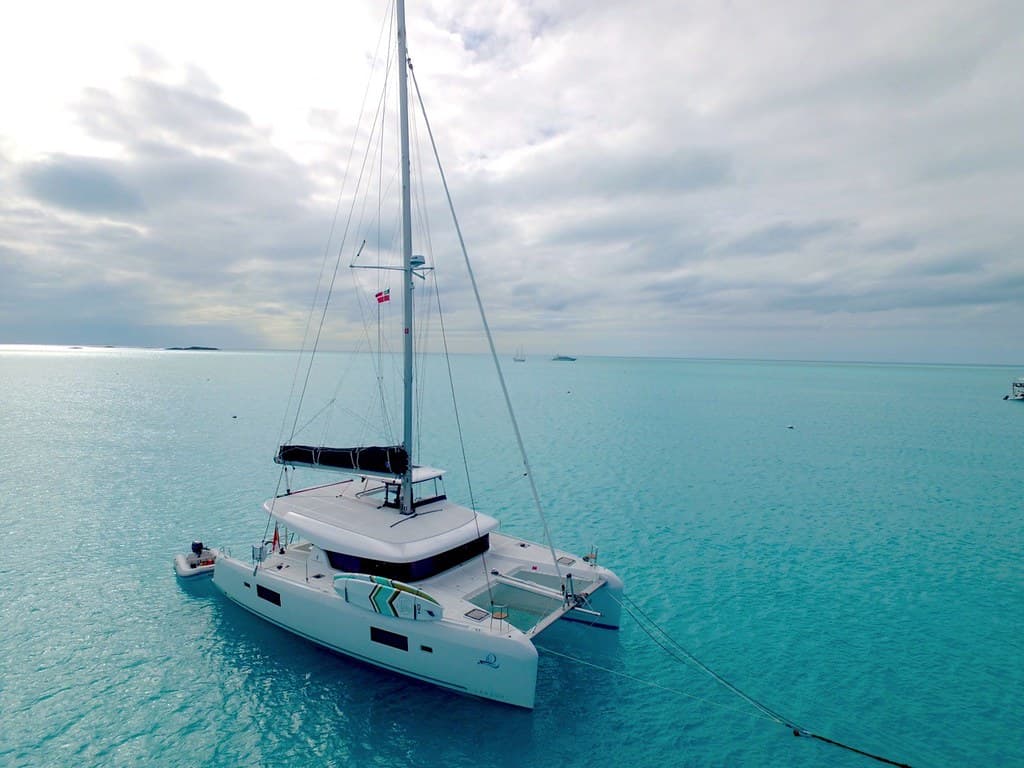
Choosing your first cruising catamaran
Stability, space and shallow draft make the catamaran easy to love. Choosing your first one well means weighing the real compromises — and knowing exactly what to check before signing.
Most first catamarans are bought the same way: a charter week in the Cyclades or the West Indies, seven days of level sailing and absurd living space, and the decision quietly makes itself. The instinct is sound. Buying well, though, means understanding what the charter week did not show you.
Why the catamaran wins
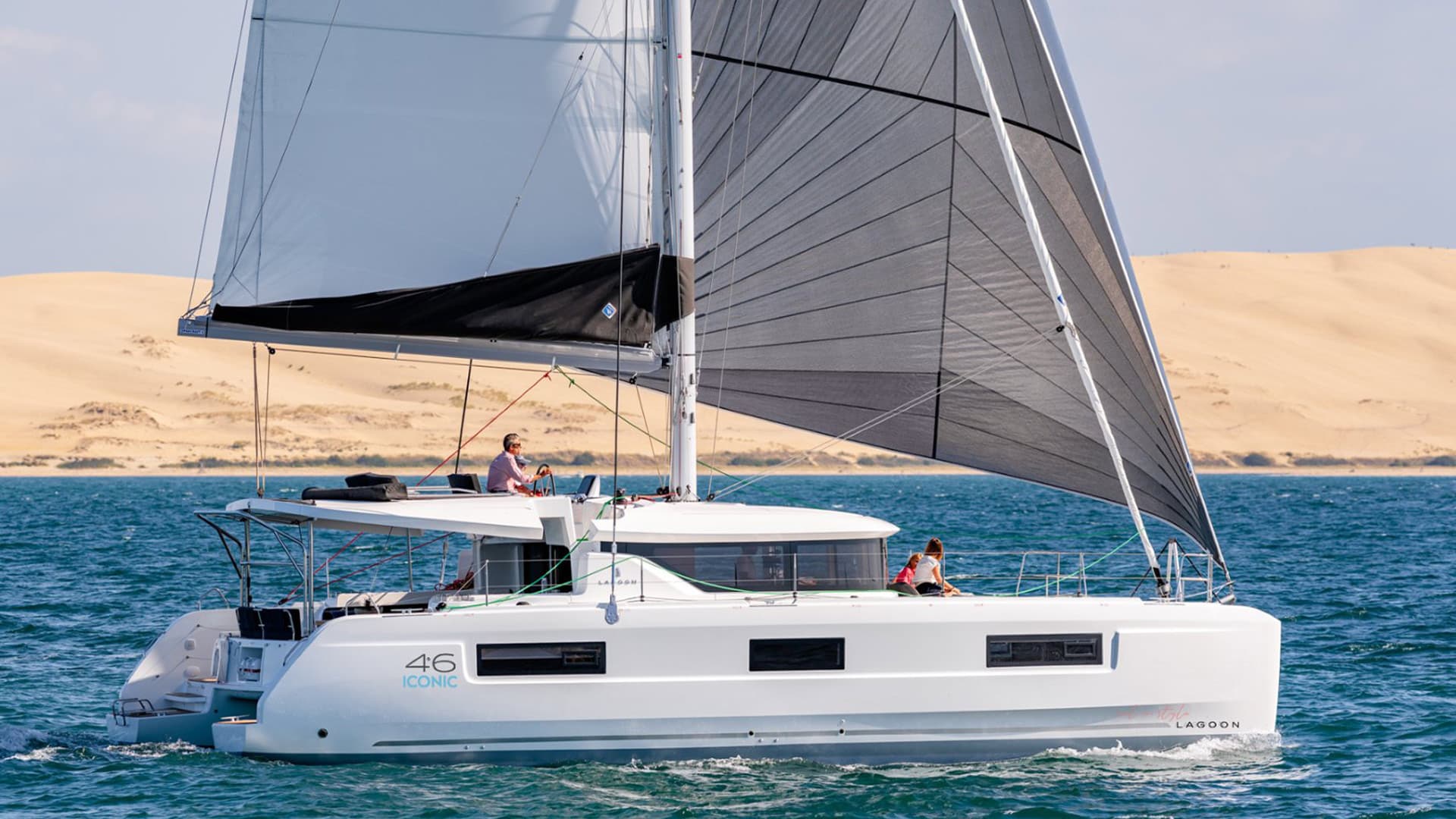
Three arguments do most of the work. Stability: a cruising cat sails at 3-5 degrees of heel instead of 20 — glasses stay on the table, the crew arrives rested, the family stays willing. Volume: a 42-foot catamaran offers the living space of a 55-foot monohull, with a genuine saloon at deck level, cabins in the hulls and a cockpit that becomes the main room of the house. Draft: at 1.2-1.5 metres you anchor where deep keels cannot follow, and in the Aegean or the Bahamas that redraws the whole cruise.
The compromises the brochure omits
Upwind, a cruising cat tacks through 100-110 degrees where a good monohull manages 85-95, and it will not claw off a lee shore with the same authority: you will motor more than you expect. Sensations are muted — without heel there is little feedback, and the helm feels closer to a fast trawler than to a dinghy; some sailors love the calm, others miss the conversation. Berthing is the recurring pain: a 7.5-metre beam pays 150-200% of a monohull's rate where multihull places exist at all. And several budget lines simply double: two engines to service, two saildrives, two rudders, twice the antifouling area.
One point of seamanship, stated soberly: a catamaran does not heel to warn you it is overpowered. It asks for earlier, more disciplined reefing — a habit rather than a talent, and one any attentive sailor acquires quickly.
Cruising or performance?
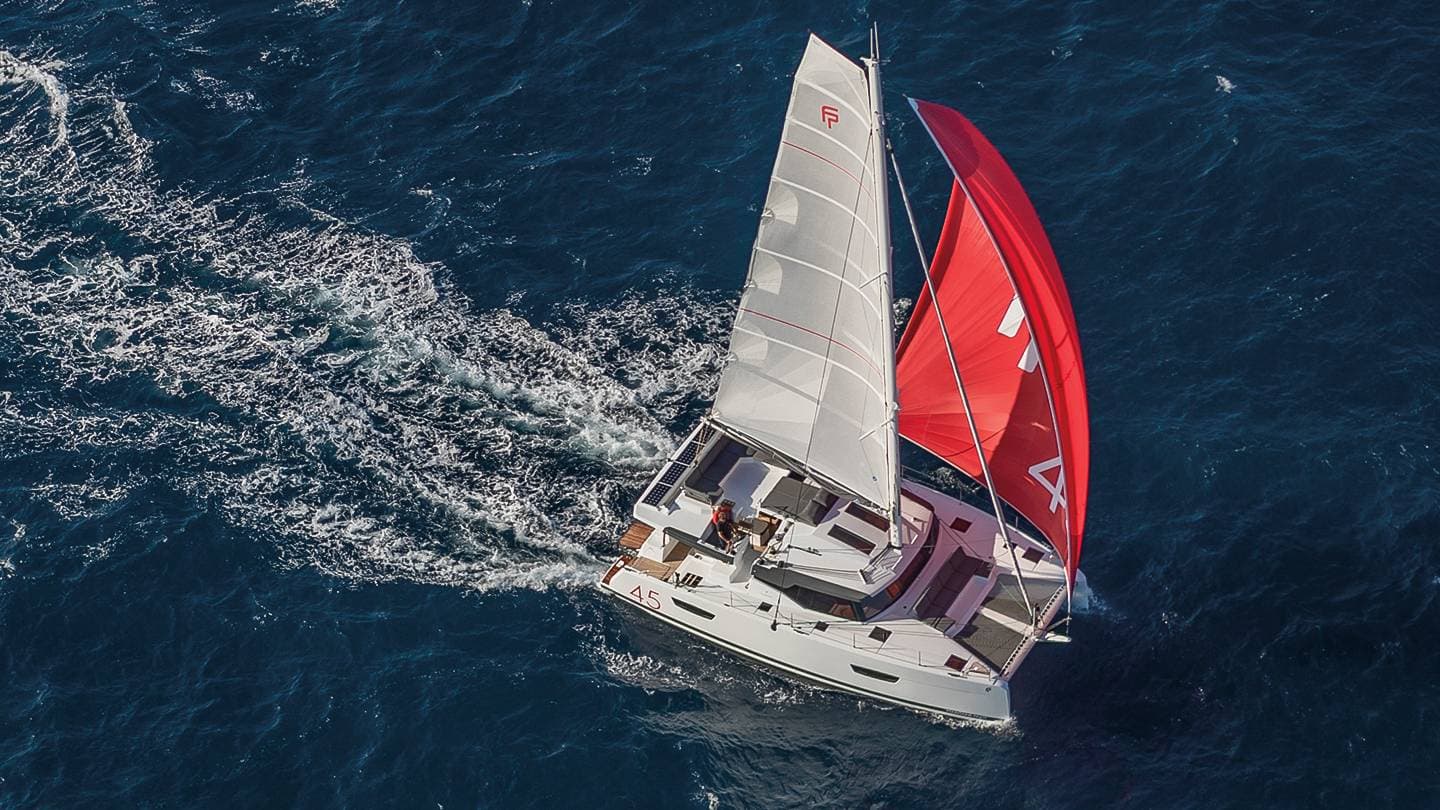
The market splits cleanly in two. Cruising cats — Lagoon, Fountaine Pajot, Bali — sell volume, payload and price per square metre; they are honest, comfortable, present in every anchorage and easy to resell. Performance cruisers — Outremer, Catana — carry daggerboards, weigh far less, sail 2-4 knots faster and point noticeably higher; you pay 60-100% more at equal length and accept finer hulls, hence smaller cabins. For a first family boat the honest answer is usually the cruising cat. Choose performance only if you already know, from miles sailed rather than videos watched, that speed matters more to you than space.
40-42 feet: the right-sized door
Below 40 feet the compromises bite: tight cabins, low bridgedeck clearance that slams in a chop, limited payload. Above 45 feet the loads turn serious — sails, winches, ground tackle — insurance and berthing jump, and shorthanded handling starts to require real systems. The 40-42-foot band (Lagoon 42, Astréa 42, Bali 4.2, Nautitech 40 Open) gives four true double cabins, honest payload, loads a couple can manage, and the deepest second-hand market for the day you sell. It is the standard first catamaran for good reasons.
Owner's version or charter version?
Most models come in two layouts. The charter version sleeps eight in four cabins with four heads. The owner's version dedicates one entire hull to you: island berth, real bathroom, desk, storage. If the boat is for your own use, the owner's layout is better to live with and often easier to resell to the next private buyer. Decide who the boat serves before you order, because the moulds decide with you.
New, or ex-charter?
A new 42-footer leaves the yard at €450,000-650,000 sailaway once electronics, sails and commissioning are added — with delivery often 12-24 months out. The alternative: charter fleets release five- and six-year-old cats every year at 40-50% below new price, professionally maintained but worked hard. Inspect with open eyes:
- Engine hours: 3,000-5,000 hours after five charter seasons is normal; judge the service records, not the counter.
- Osmosis: insist on a full out-of-water survey with moisture readings on both hulls.
- Standing rigging: five years of trade winds age the wire; replacement (€8,000-15,000) is often due at purchase — price it into your offer.
- Sails, trampolines, upholstery: charter wear concentrates exactly there.
The real budget
Whatever you buy, the purchase price is only the entry ticket. On a €450,000 catamaran, budget honestly: €5,000-6,000 of insurance, €8,000-15,000 of berthing depending heavily on region, €10,000-15,000 of maintenance with two engines to service, plus a reserve for sails and rigging. Call it 8-9% of value per year, all found. If that figure frightens you, better now than in year two.
Sail before you sign
Never buy a first catamaran without a sea trial in real wind — 15 knots or more. Feel how she tacks, listen to the bridgedeck upwind, check the sightlines from the helm, park her in a marina berth. Three hours on the water teach more than three months of forums.
The checklist before you sign
- Full survey with the boat out of the water, moisture readings on both hulls
- Service history and hour counters for both engines; saildrives and bellows inspected
- Age of the standing rigging documented; replacement budgeted beyond 8-10 years
- Layout matched to your real programme — owner's version if the boat is for you
- A berth secured at a known price before the purchase, not after
- Sea trial in 15 knots or more, with a proper upwind leg
- A written annual budget accepted by everyone who will pay it
- VAT status and paperwork verified by a broker or maritime lawyer
Reading is the easy part. Then you have to decide.
A boat purchase turns on what you cannot see: the real history, the state of the hull below the waterline, how much room there is to negotiate. We represent you — independent of any seller, paid by you alone.