Crossing the Atlantic: preparation, route, the ARC
Canaries to the Caribbean on the trade-wind route: 2,700 miles, 15 to 21 days at sea. Preparing boat and crew, and what the ARC really changes.
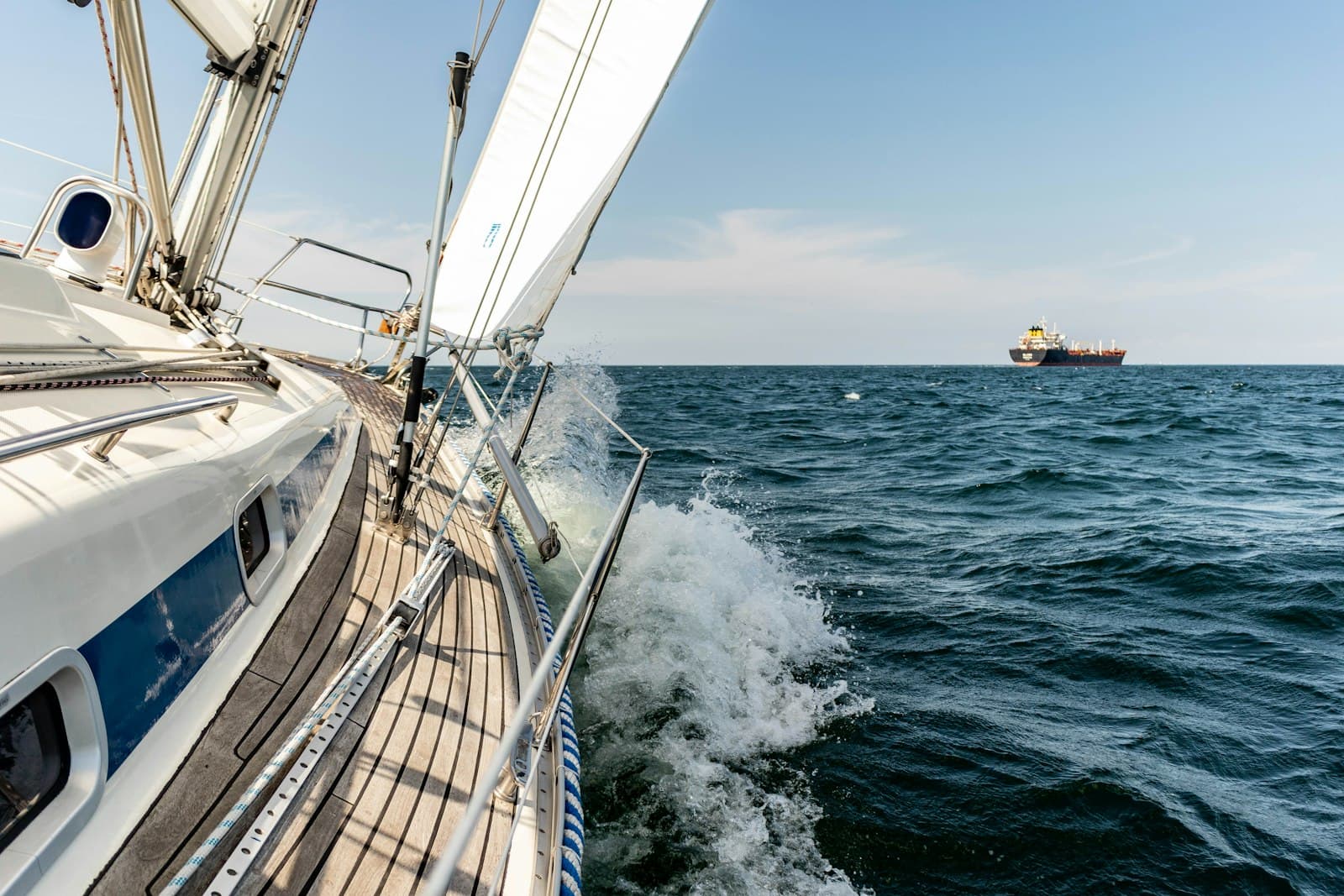
Crossing the Atlantic under sail on the trade-wind route — Canaries to the Caribbean, roughly 2,700 miles — takes 15 to 21 days at sea for a 40 to 50 foot cruising yacht, with an ideal departure between late November and mid-January. It is not a feat reserved for professionals: several hundred cruising boats do it every winter, many of them family crews. It is, however, a project that deserves serious preparation — a year ahead for most people.
The trade-wind route: head south, then turn right
The old saying still holds: sail south until the butter melts, then turn west. In practice, from the Canaries you dive south-west until you find the established trades around 20 degrees north, with an optional stop in Cape Verde to break the trip and top up provisions. From there it is near-continuous downwind sailing: 15 to 25 knots behind you, a steady easterly swell, and daily runs of 120 to 160 miles for a well-sailed boat. The return to Europe goes north via the Azores in May or June — a harder, colder passage that deserves respect when you plan the outbound leg.
Preparing the boat: what actually breaks
Running downwind for three weeks, anything that can chafe will chafe. Chafe is enemy number one: halyards, sheets, preventers — everything gets checked and protected. The rig deserves a full professional inspection less than a year before departure. Then come the downwind sails (pole and poled-out genoa, asymmetric spinnaker or twin headsails), a generously sized autopilot with spares — or a windvane — and a coherent energy budget: hydrogenerators and solar have largely replaced hours of engine charging. On the safety side, your flag state will impose an offshore equipment category: serviced liferaft, EPIRB, DSC VHF, and nowadays almost always a satellite connection for weather. The glossary covers these terms if needed.
Preparing the crew: watches, food and sleep
Most boats cross with three, four or five aboard: enough for comfortable watches, not so many that the boat shrinks. Test your crew beforehand on a real delivery — a Biscay crossing or a leg down to Madeira reveals more than any interview. The first 48 hours belong to seasickness: plan pre-cooked meals and short watches. On provisioning: one week of fresh food, three weeks of dry stores, plus a safety reserve; for water, 3 litres per person per day, with a watermaker as a comfort rather than a requirement. Sleep is the real currency on board: a rested crew makes good decisions, an exhausted one accumulates small mistakes.
The ARC: what crossing in company really changes
The ARC (Atlantic Rally for Cruisers) leaves Las Palmas in late November with 150 to 200 boats bound for Saint Lucia. What you buy, for an all-in budget of roughly 2,000 to 4,000 euros depending on boat size and crew: demanding pre-departure safety inspections, preparation seminars, position tracking, and an intense social scene at both ends. What the ARC does not provide: the wind, or experience on your behalf — every boat remains self-sufficient at sea, and rescue in mid-Atlantic is measured in days, not hours. The fixed date cuts both ways: it structures your preparation, but can push you out in a mediocre weather window. Independent crews often leave a few weeks later, once the trades are better established.
Eighteen to twenty-one days of life at sea
A successful crossing is a monotonous crossing. Days revolve around watches, cooking, trolling a fishing line, the morning weather files and small repairs. Days 3 to 5 are often the hardest mentally: land is far behind, the arrival does not yet feel real. Then the rhythm settles in, and many sailors describe the second half as one of the finest experiences of their sailing lives. The Caribbean landfall deserves its own planning: read our guide to the Caribbean season to make the most of it.
Where to start
- Build downwind and night-sailing miles: an offshore course and a delivery passage teach more than any book.
- At T-minus 12 months: rig inspection, refit list, downwind sail choices.
- At T-minus 6 months: crew confirmed and sea-tested, energy plan validated over 48 hours of full autonomy.
- Choose ARC or independent departure to suit your profile: for a first family crossing the ARC reassures; confident crews gain from a free weather window.
- If the crossing is step one of a bigger plan, read sailing around the world before choosing your boat from the sailing yachts family.
Frequently asked questions
How long does it take to sail across the Atlantic?
Allow 15 to 21 days from the Canaries to the Caribbean for a 40 to 50 foot cruising yacht averaging 120 to 160 miles a day. Fast catamarans get under 14 days; smaller or more cautious boats can take 25. The return via the Azores, against the prevailing winds, is longer and more demanding.
What kind of boat do you need to cross the Atlantic?
Condition matters more than size: well-prepared 32 to 36 footers cross uneventfully every year. The critical items are the rig, the rudder, the self-steering, the energy system and watertight integrity. A newer 40 to 46 footer simply offers more comfort and speed, not inherently more safety.
Is the ARC worth the money?
For a first crossing, often yes: the safety inspections, seminars and community justify the 2,000 to 4,000 euros, especially for families or short-handed crews. Experienced sailors frequently prefer to skip the rally and leave later in the season, on a weather window of their own choosing.
The surest way to know a boat is to sail her.
Before you buy — or simply to get away this season. Tell us your dates and your cruising area, and we source the right boat through our network of owners and vetted fleets.