Trawler or fast cruiser: miles or knots?
Trawler or fast cruiser? Range and frugality versus speed and packed days: real fuel burn, typical owner profiles and the semi-displacement compromise.
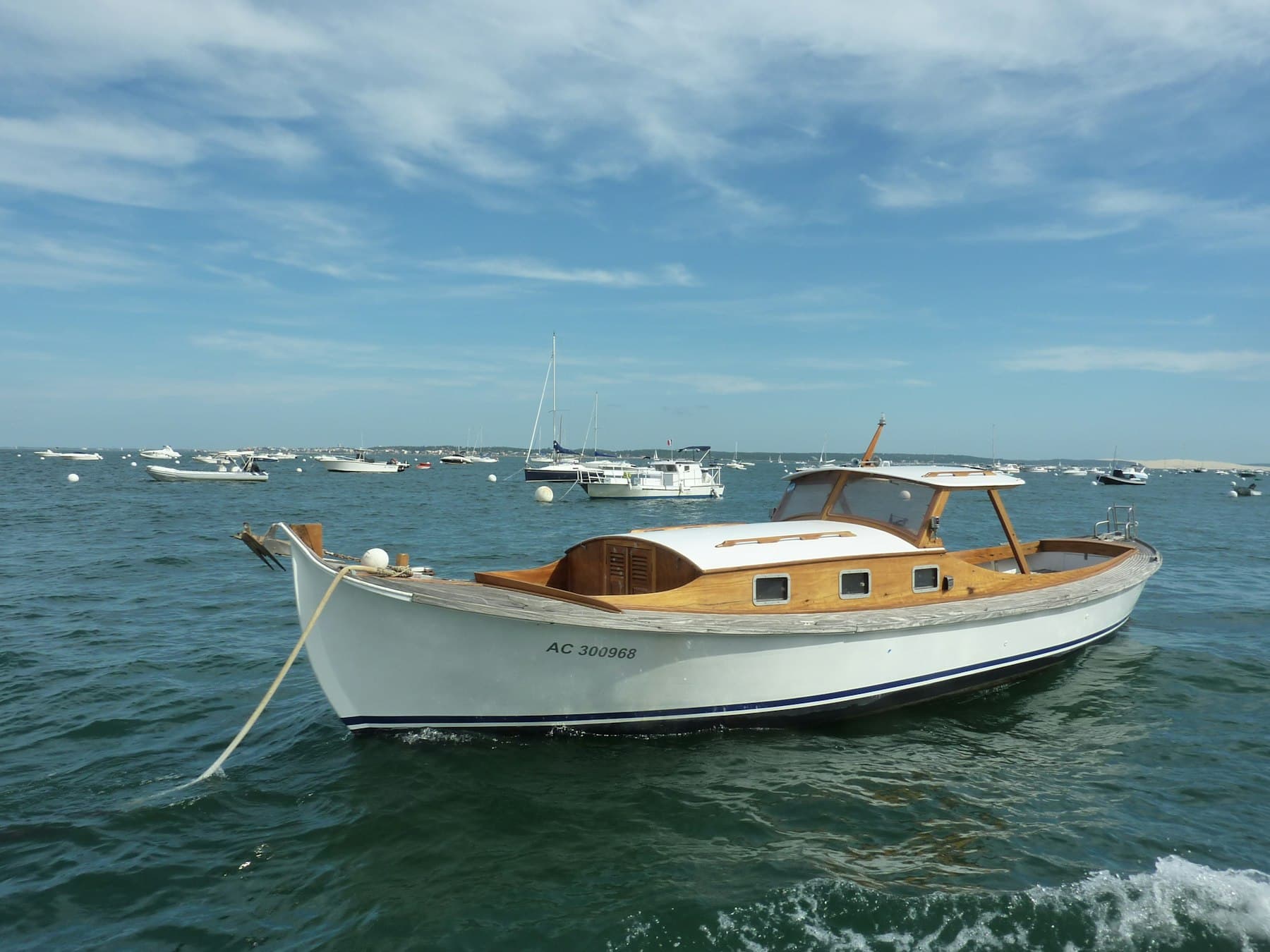
A trawler is built for range: a displacement hull, 7-9 knots of cruising speed, fuel burn of 5-10 litres per hour and a radius of action measured in thousands of miles. A fast cruiser is built for time: a planing hull, 20-30 knots, and an hourly fuel burn ten to twenty times higher. Neither is "better" — the right choice depends on your relationship with time, distance and diesel.
Two philosophies of going to sea
The trawler descends from working fishing boats: a heavy displacement hull, a modest engine turning at low revs for thousands of hours, a protected pilothouse and tanks sized for passages. Its speed is capped by waterline length — around 8-9 knots for a 40-footer — but it holds that speed in almost any weather, hour after hour, in genuine long-range comfort. The fast cruiser makes the opposite bet: a deep-V hull that climbs onto the plane, two powerful engines, and the ability to knock off 60 miles before lunch at anchor. One turns the passage into the voyage; the other compresses the passage to maximise time at the destination. Both families have their own pages in our files: trawlers and classics on one side, sport cruisers on the other.
Real-world fuel burn, numbers in hand
Let us talk numbers, because this is where the decision is made. For a well-found 40-footer:
- Trawler at 8 knots: 5-8 L/h, roughly 0.8-1 litre per mile.
- Semi-displacement at 14 knots: 40-60 L/h, around 3-4 litres per mile.
- Planing cruiser at 25 knots: 100-140 L/h, around 4-6 litres per mile.
On a typical 100-mile passage — a mainland-to-Corsica hop, say — the trawler burns about 100 litres in 12-13 hours; the fast cruiser burns 450-600 litres in 4 hours. At marina diesel prices, that gap amounts to several hundred euros per passage. Multiply by your realistic number of trips per year before deciding anything.
Range, comfort and seakeeping
With 1,500-4,000 litres of diesel in the tanks, a trawler offers 1,500-3,000 miles of range: the Balearics, Greece or even an island-hopping Atlantic crossing become realistic projects. A fast cruiser rarely carries more than 1,000-1,500 litres — 200-300 miles at speed, plenty for coastal use, not enough for serious voyaging. At sea: displacement hulls roll (they always do), and most serious trawlers end up fitted with stabilisers; planing hulls pound in a short chop but can sprint between weather windows and be home before the blow arrives. Two different kinds of discomfort — sea-trial both in real waves before you choose.
Total cost: purchase, upkeep, resale
Size for size, a new trawler often costs more per foot: heavy construction, voyaging equipment, generous volumes. But its single, lightly stressed engine ages remarkably well — a trawler diesel showing 4,000 well-maintained low-rev hours inspires more confidence than a hard-driven engine showing 1,200. The fast cruiser concentrates its costs on two powerful engines: double servicing, sterndrives or shaft lines, and a fuel bill that becomes the biggest line in the budget as soon as you actually use the boat. To make the comparison concrete for your own programme, run both profiles through the cost of ownership calculator. At resale, both are functioning niche markets: trawlers sell to a knowledgeable, patient audience; fast cruisers to a wider market that is more sensitive to engine hours.
Semi-displacement: a serious compromise?
Between the two, the semi-displacement hull offers a genuine third way: able to cruise at 12-18 knots when the schedule demands it, and to slow to 8-9 knots in economy mode. The flexibility is the selling point — choosing your speed to suit the weather and the mood. The limits are well known: a higher purchase price (these hulls tend to equip premium boats), fuel burn that is never frugal above 10 knots, and a compromise hull that excels nowhere. For a mixed programme — long cruises constrained by a working calendar — it is often the honest answer all the same.
Where to start
Before viewing a single boat:
- Count your realistic annual miles and typical trip length: 300 miles a year does not justify an ocean-capable trawler.
- Run the fuel numbers for your typical passage at both speeds — the result is often a surprise.
- Sea-trial both hull types in a real seaway, not in boat-show calm.
- Put your cruising programme down on paper first: our guide to defining your cruising programme gives the method.
The right boat is neither the fastest nor the longest-legged: it is the one whose rhythm matches yours.
Frequently asked questions
What is the real fuel consumption of a trawler?
A 40-foot trawler cruising at 7-8 knots burns 5-8 litres per hour, roughly one litre per nautical mile. A 50-footer burns more like 8-12 L/h. That is five to ten times less than a comparable planing cruiser at cruising speed.
Can a trawler cross the Atlantic?
Some can. Genuine passage-making trawlers (ocean design category, 3,000+ litres of fuel) offer 2,000-3,000 miles of range, enough to plan an island-hopping Atlantic crossing. Most coastal trawlers of 33-40 feet, however, have neither the range nor the design brief for that kind of voyage.
Does a semi-displacement hull really burn less fuel?
At reduced speed (8-9 knots), yes: a semi-displacement hull comes close to trawler consumption. Above 10-12 knots the burn climbs steeply, reaching 40-60 L/h at 14-15 knots on a 40-footer. The compromise is real, but you pay for the speed at the pump whenever you use it.
Reading is the easy part. Then you have to decide.
A boat purchase turns on what you cannot see: the real history, the state of the hull below the waterline, how much room there is to negotiate. We represent you — independent of any seller, paid by you alone.