Anchoring: the complete technique
Anchor choice, scope, setting the hook, anchor watch and seagrass rules: the complete method to anchor safely and sleep soundly on the hook.
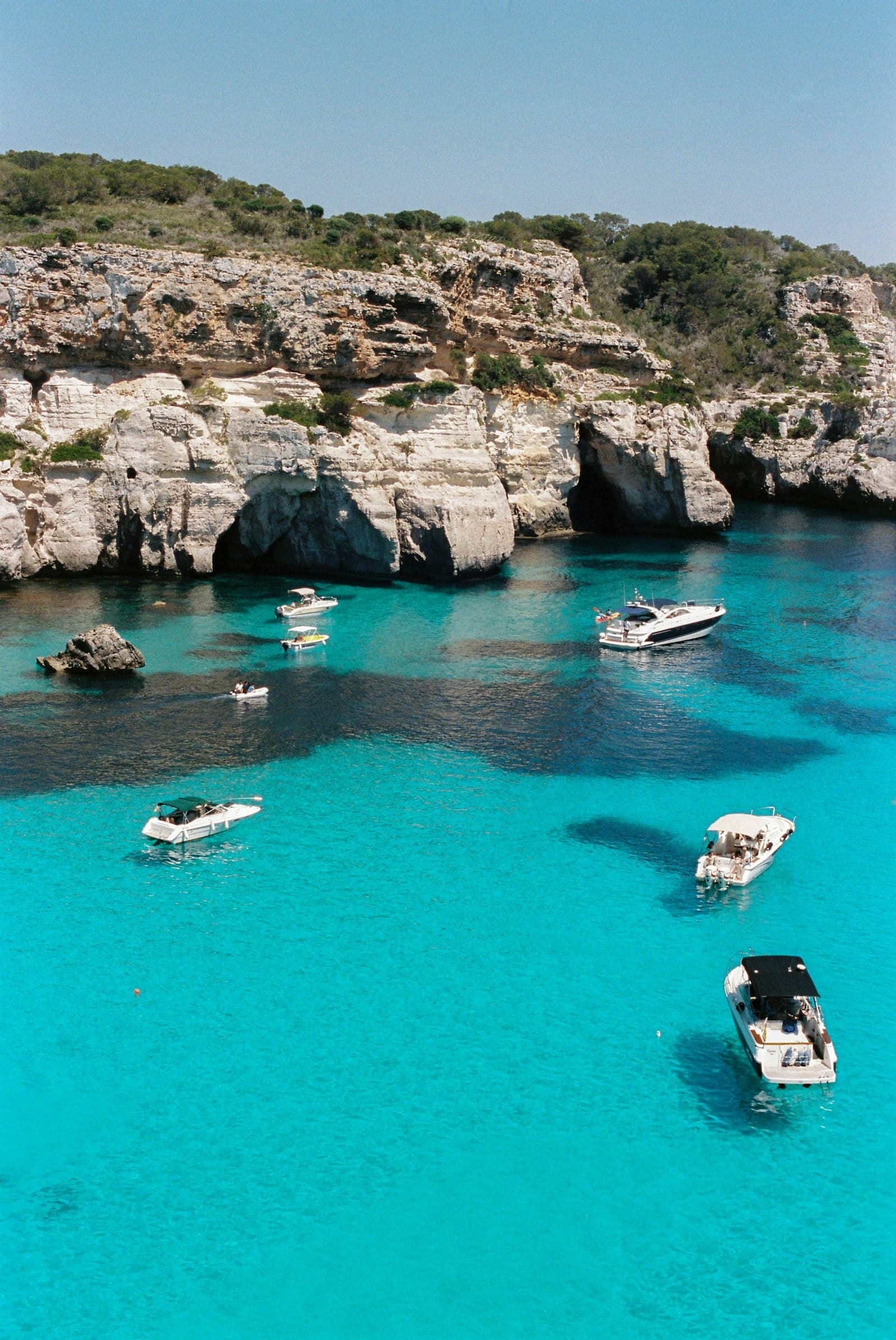
Anchoring means securing your boat to the seabed in a sheltered spot, with enough chain out — in practice 3 to 5 times the water depth — then setting the anchor by backing down under engine before you switch off. There is nothing mysterious about it: a sequence of simple steps in the right order. Here is the complete method, from choosing your ground tackle to the night watch, seagrass rules included.
Choosing the anchor and sizing the rode
New-generation concave-blade anchors (Rocna, Spade, Vulcan and their peers) set faster and hold far better than the flat designs inherited from the 1980s. If your boat still carries an older pattern, this is the first upgrade to make: budget roughly 500 to 1,500 euros depending on size, a fraction of the cost of the smallest anchoring mishap. Simple rule: go one size above the manufacturer's recommendation; nobody has ever regretted an anchor that was too big.
For the rode, all-chain is the cruising standard: 50 to 80 metres of 8 to 12 mm chain depending on the boat's displacement. Chain shrugs off chafe on rock and its weight dampens snatch loads. Add a chain hook on a nylon snubber: it takes the strain off the windlass, which is not built to hold the boat. The terminology is covered in the glossary.
Reading the anchorage before you commit
A good anchorage is judged on three things: shelter, bottom, room. Shelter first — from the forecast wind, not just the present one: read the marine forecast and beware of overnight wind shifts that turn an idyllic cove into a trap. Bottom next: sand holds superbly, mud reasonably, weed and rock poorly or not at all; the chart and the colour of the water tell you plenty. Room last: the boat will swing in a circle around her anchor; make sure that circle clears both your neighbours and any shallows, remembering that sailboats and motorboats do not swing the same way.
The ideal depth sits between 3 and 8 metres: enough water for swell and tide, not so much that it swallows your whole chain locker.
The manoeuvre: lay it, drift back, dig it in
Come head to wind and stop the boat. Lower the anchor to the bottom, then back down very slowly, paying out chain as you go: it should lie in a line on the seabed, not in a heap on top of the anchor. Veer at least three times the depth — measured from the bow roller to the bottom, at high water where tides matter — and five times if wind is forecast.
Then comes the step too many crews skip: setting the anchor. With the scope out, build up gradually to 1,500-2,000 rpm in reverse for twenty to thirty seconds. Pick two landmarks in transit abeam: if they stop moving while the engine pulls, the anchor is set. If the boat drags, recover everything and start again — no half measures at anchor.
Snubber, checks, anchor watch
Fit the chain hook, ease the chain until the snubber takes the load, then set an anchor alarm (plotter or phone app) with a radius that matches the scope you have out. If the water is clear, dive on the anchor with a mask: thirty seconds of snorkelling beats any amount of theory.
In strong wind, keeping watch remains the rule: someone sleeps with one ear open, the alarm is set tight, and everyone aboard knows how to start the engine alone. Most dragging happens at night, on a wind shift — precisely when nobody is looking.
Seagrass and regulated anchorages
In the Mediterranean, Posidonia seagrass meadows are protected: anchoring in them is banned for larger yachts and increasingly restricted for all sizes under local rules, with genuine patrols and fines. Apps map the meadows, and regulated mooring fields offer buoys instead — the technique for picking one up is covered in our guide to mooring buoys. Wherever you cruise under whatever flag, the reflex is the same: aim for the pale patches of sand and check the local rules before entering a protected area.
Where to start
Anchoring is learnt in fair weather, when nothing is at stake:
- Pick a quiet cove with a sand bottom in 4 to 6 metres of water.
- Brief your foredeck crew beforehand: hand signals rather than shouting, one job each.
- Run the full sequence, including the reverse set and the alarm.
- Recover everything and do it again: three anchorages in an afternoon teach more than a summer of guesswork.
- Test your night-watch routine on a calm night, before the one that blows.
A crew that anchors properly sleeps well. That is the whole difference between enduring a night at anchor and enjoying it.
Frequently asked questions
How much chain should you let out when anchoring?
The reference is three times the water depth in settled weather, five times when wind is forecast — depth measured from the bow roller to the bottom, at high water. Letting out more costs nothing if swinging room allows. It is the chain lying on the seabed that provides the holding, by keeping the pull as horizontal as possible.
What is the best anchor for cruising?
New-generation concave-blade anchors (Rocna, Spade, Vulcan, Ultra and similar) dominate independent tests for setting speed and holding power. Choosing between them matters less than choosing the size: go one model up from the manufacturer's recommendation. A modern, slightly oversized anchor transforms life at anchor.
Are you allowed to anchor in seagrass in the Mediterranean?
Less and less: around the Mediterranean, anchoring in Posidonia meadows is banned for larger yachts and restricted for others under local rules, with real fines issued. Aim for the pale sand patches or take a buoy in a regulated mooring field. Check the local regulations for your cruising area before arriving — apps that map the meadows help a lot.
The surest way to know a boat is to sail her.
Before you buy — or simply to get away this season. Tell us your dates and your cruising area, and we source the right boat through our network of owners and vetted fleets.