Night sailing: preparation and best practice
Lights, watch systems, night vision and harbour entries: how to prepare a calm night passage, from the pre-dusk briefing all the way through to sunrise.
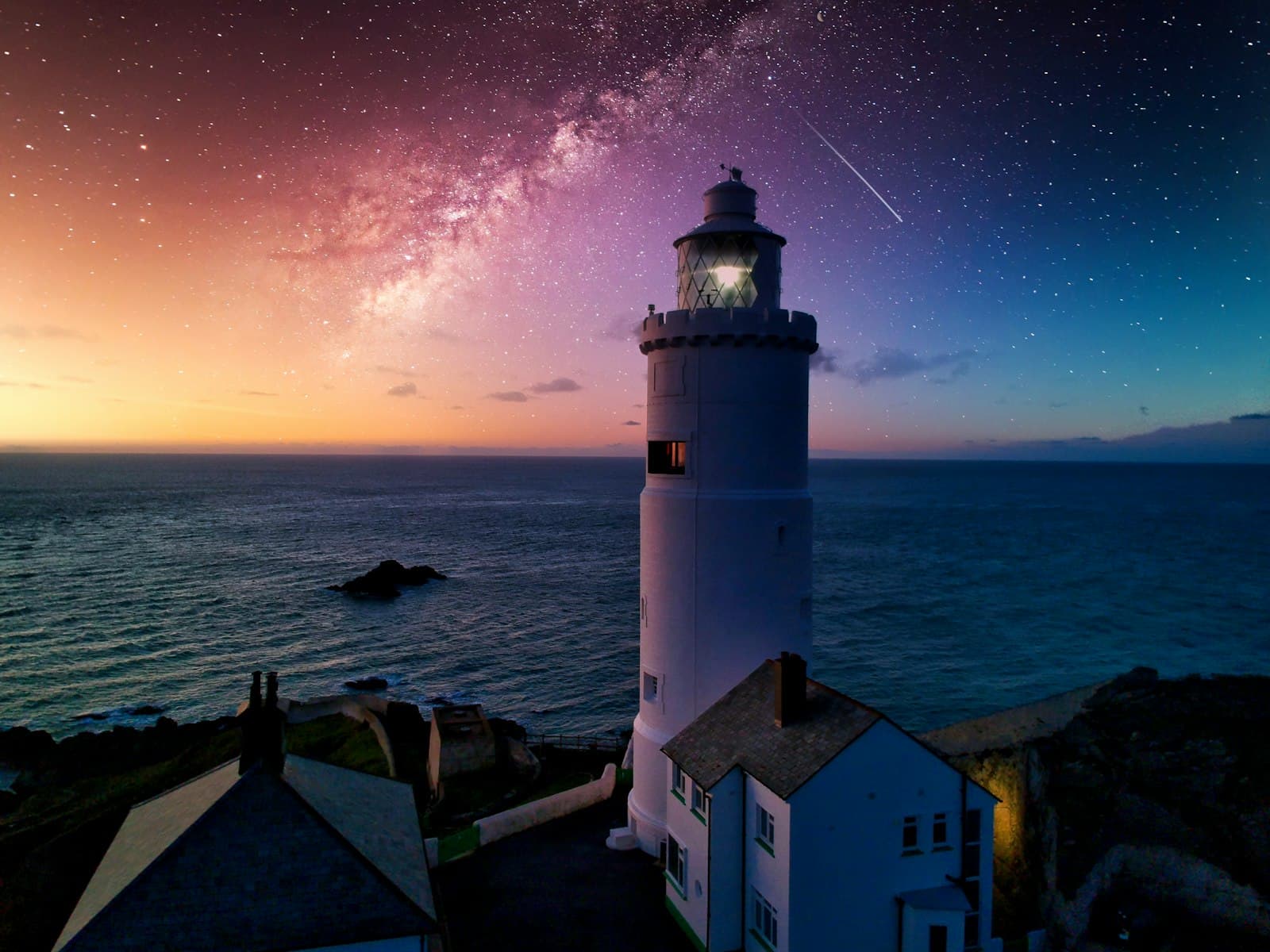
Night sailing is legal for recreational boaters under most flags: no extra qualification is required beyond whatever licence your boat already needs, provided you show the regulation lights and carry safety equipment appropriate to how far offshore you go. The real difference from daytime comes down to three things: you see less, you tire faster, everything takes longer. The remedy is well known: prepare the route before dusk, organise watches, and protect your night vision.
Prepare the boat and the route before dark
Everything that can be done in daylight should be done in daylight. Plot the route with dangers highlighted and clear decision points; ideally plan your landfall for sunrise. Check the window in the marine forecast: night is not the time to discover the wind is building.
On deck: everything stowed and lashed, sheets clear to run. Lifejackets and harnesses are out, adjusted to each crew member, with a personal light attached. The hot meal is eaten before dusk, a thermos prepared for the watches. Above all: reef before dark, as a matter of principle. Tucking in a reef at 11 pm under a squall costs double what it does at sunset.
Navigation lights: seeing and being seen
A sailing yacht under 20 metres shows sidelights and a sternlight — or a masthead tricolour, reserved for when she is under sail alone. The moment the engine drives, she adds the white steaming light and becomes, in the eyes of the rules, a power-driven vessel. Test your lights at the dock before leaving: a dead bulb is a miserable thing to change at sea.
Reading other vessels' lights matters just as much: two white lights in a vertical line plus sidelights mean a ship under way, and specific combinations signal fishing, trawling or towing. Revise the light patterns together with the rules of the road. An AIS transponder is a valuable complement: it makes you visible on a ship's screens long before your lights do.
Organise watches and the lookout
With two or more aboard, the night is cut into watches of two to four hours depending on crew size and weather. Handovers are done properly: position, current traffic, sail carried, standing orders. The skipper sets one rule that defuses everything: wake me for a doubt, not for a problem — once it is a problem, it is already late.
The lookout is active: a full sweep of the horizon every five to ten minutes, ears included — an engine is often heard before it is seen. The plotter and AIS help but do not replace eyes: not everything afloat transmits. For the equipment side, see our guide to electronic navigation.
Protect your night vision
The eye takes twenty to thirty minutes to adapt to darkness, and a single white light destroys that capital in a second. Hence the ship's rules: red lighting in the cockpit and at the chart table, screens in night mode at minimum brightness, red headtorches for everyone. For scanning the horizon, 7x50 binoculars gather residual light remarkably well, and looking slightly to one side of a faint light often makes it easier to see: peripheral vision is more sensitive at night.
The night harbour entry: the real trap
A classic paradox: the night passage goes smoothly, and everything gets complicated at the harbour. Leading lights and channel marks drown in the urban glare, unlit obstacles disappear, and a night's fatigue blunts judgement. The best option is often not to enter: slow down and stand off, or anchor in clean, sheltered water until dawn.
If you must go in, prepare it on the chart: exact light characteristics (colour, rhythm, sectors), depths, dangers. Dead-slow speed, one crew member on dedicated lookout at the bow, and the searchlight as a last resort only — it wrecks everyone's night vision, yours and other crews' alike.
Where to start
- Choose an easy first night: two to three hours, clear moon, stable weather, waters you know.
- Sail with at least two aboard, harnesses clipped on from dusk, jacklines rigged.
- Prepare route and landfall in daylight, with a written plan B.
- Test navigation lights, red lighting and personal lamps at the dock before casting off.
- Debrief the next day: what was missing that night becomes the checklist for the next one.
A night at sea is not an ordeal to endure: well prepared, it is one of the finest moments of any cruise — the sky included, the crowds left behind.
Frequently asked questions
Do you need a special licence to sail at night?
No: under most flags, recreational boaters need no additional qualification to sail at night. The obligations are the same as by day — whatever licence your boat requires, working navigation lights and safety equipment matching how far offshore you go. The only real extra requirement is preparation: route plotted, crew briefed, watches organised.
What lights must a sailing boat show at night?
Under sail alone, a boat below 20 metres shows sidelights (red to port, green to starboard) and a white sternlight, or a single masthead tricolour. As soon as the engine is driving, she must add the white steaming light and switch off the tricolour: she is then treated as a power-driven vessel under the rules.
How do you stay awake on a night watch?
Sleep is managed in advance: an afternoon nap, a hot meal before dark, short watches of two to three hours. During the watch, stay active — horizon sweeps, regular position checks, a thermos of something hot — rather than sitting motionless under the sprayhood. Off watch, genuinely sleep, and wake the skipper at the slightest doubt: that is the standing order, not an admission of weakness.
The surest way to know a boat is to sail her.
Before you buy — or simply to get away this season. Tell us your dates and your cruising area, and we source the right boat through our network of owners and vetted fleets.